Diabetic Retinopathy And Lutein: What The Small Trials And ACCORD Eye Measured
Diabetes is the place where eye supplements and real retinal disease meet most directly, and where the gap between what a trial measured and what a person needs is widest. A handful of small studies have given lutein and zeaxanthin to people with diabetes and measured how they see. A very large trial, ACCORD Eye, measured whether the retinopathy actually got worse. They asked different questions, and only one of them is about the disease.

- The small human trials of lutein and zeaxanthin in diabetic retinopathy enrolled from a few dozen to about ninety people and measured visual function: acuity, contrast sensitivity, foveal thickness.
- Some show modest improvements on those tests. None was built to show that retinopathy progresses more slowly or that sight is protected.
- ACCORD Eye enrolled thousands and measured progression on graded retinal photographs. Intensive blood-glucose control and, in the main trial, fenofibrate slowed progression. Intensive blood-pressure control did not.
- For bilberry and astaxanthin in diabetic retinopathy, the evidence found for this article is from animals and laboratory work, not from trials in people.
- Early retinopathy usually gives no symptoms, and only a dilated eye examination shows it. That is the safeguard no capsule replaces.
Function is not progression
Diabetic retinopathy is damage to the small blood vessels of the retina caused by long exposure to high blood sugar and related risk factors. At first it is often silent. Later it can leak fluid into the macula, cause new fragile vessels to grow, and threaten sight. The treatments that exist for the advanced stages, laser and injections into the eye, are aimed at exactly those late complications.
When researchers ask whether something helps retinopathy, there are two very different endpoints they can choose.
- Visual function. How well a person sees on tests such as acuity, contrast sensitivity or electrical responses from the retina. A supplement that raises a contrast score has changed a measurement.
- Progression. Whether the disease itself worsens, judged from photographs of the back of the eye graded on a standard severity scale, or by whether laser or surgery becomes necessary. A treatment that slows progression has changed what happens to the eye.
Both are legitimate, but they are not the same thing, and a good deal of confusion in this area comes from treating an improvement in the first as though it were an improvement in the second. It is possible for contrast sensitivity to improve while the underlying retinopathy quietly worsens, and it is possible for the retinopathy to be held steady with no change a person can feel. The small trials below are all of the first kind. The large one is the second.
What the small lutein trials measured
Four human studies are the core of what exists on lutein and zeaxanthin in people with diabetic eye disease. The amounts are what each study gave. None of them is a Visivra figure.
| Study | Who took part | What was given | What it measured and reported |
|---|---|---|---|
| Hu 2011 | 90 people in three groups: 30 with non-proliferative retinopathy given the carotenoids, 30 with retinopathy given nothing, 30 healthy controls | Lutein 6 mg and zeaxanthin 0.5 mg daily for three months | Serum lutein and zeaxanthin were lower in the retinopathy group than in healthy controls. After supplementation, acuity, contrast sensitivity at three spatial frequencies and foveal thickness changed favourably. |
| Zhang 2017 | 31 people with non-proliferative retinopathy, randomised, double-blind, placebo-controlled | Lutein 10 mg daily or placebo for 36 weeks | Acuity improved slightly in the lutein group. Contrast sensitivity rose significantly at one spatial frequency within the group, but the difference from placebo was only marginal (p=0.09). No significant change in glare sensitivity. |
| DiVFuSS 2016 | People with type 1 or type 2 diabetes and no retinopathy or mild to moderate non-proliferative retinopathy, randomised | A multi-component formula of xanthophylls, antioxidants and botanical extracts, twice daily, or placebo, six months | Better visual function on every measure at six months, plus improvements in some blood lipids, an inflammation marker and neuropathy symptoms. No significant change in retinal thickness, HbA1c, total cholesterol or TNF-alpha. |
| Moschos 2017 | 60 people (120 eyes) with type 2 diabetes and no retinopathy, in a retrospective study | Lutein 10 mg, zeaxanthin 2 mg and meso-zeaxanthin 10 mg daily for two years | On optical coherence tomography and multifocal electroretinography, central foveal thickness and the retinal response density near the fovea increased at two years. |
Four studies, from a few dozen to about ninety people, three months to two years. Every outcome is a function or a structural measurement.
Read them carefully and the limits show. Hu's comparison group of people with retinopathy was given nothing rather than a placebo, and the abstract describes no blinding. Zhang's trial was properly randomised and placebo-controlled, and its own headline is cautious: the authors called the contrast findings potential improvements and asked for further studies. On the crucial comparison with placebo, the effect at that spatial frequency was only marginal.
DiVFuSS is the largest and most positive of the four on function, but it tested a formula of many ingredients, including botanical extracts, so a good result cannot be assigned to lutein. It also found no change in retinal thickness or in HbA1c, and it enrolled people with no or mild retinopathy. Moschos's study had no comparison group described in its abstract, and its finding of increased foveal thickness is difficult to interpret one way or the other.
None of the four followed people long enough, or in large enough numbers, to ask whether retinopathy worsened more slowly. The authors of the two smaller trials say as much when they call for larger studies.
Macular pigment in people with diabetes
A related question is whether people with diabetes have less macular pigment to begin with. That would give a reason to test carotenoids in them. The evidence is mixed, and it is cross-sectional, meaning a single snapshot in time rather than a follow-up.
Scanlon and colleagues measured macular pigment density in 150 people: healthy controls, type 1 diabetes and type 2 diabetes. Density was lower in type 2 diabetes (0.33) than in type 1 diabetes (0.49) or controls (0.48), a difference that stayed statistically significant after adjustment (p=0.04). She and colleagues measured 401 urban Chinese adults, with and without diabetes and with early retinopathy, and found no significant difference in pigment density between the three groups after adjustment. Density was positively linked to central foveal thickness and to eating green vegetables and goji berries.
So one study finds lower pigment in type 2 diabetes and another does not. Neither can say whether raising pigment would change the course of the disease, and neither followed anyone over time.
Bilberry and astaxanthin
The Visivra artwork also names bilberry extract and astaxanthin, so it is fair to ask what exists for them in diabetic retinopathy.
For this article, PubMed and Europe PMC were searched for controlled human studies of bilberry, anthocyanin extracts and astaxanthin in diabetic retinopathy. No randomised trial of either on retinopathy progression turned up. What does exist is animal and laboratory work, and reviews that say so.
- Bilberry. A 2025 study gave an anthocyanin-rich bilberry extract for 14 days to rats made diabetic with streptozotocin and nicotinamide. Non-fasting blood glucose, retinal markers of oxidative stress and retinal VEGF and MMP-9 expression improved, and the authors suggested it could be a complementary approach in early diabetic retinopathy. That is a rat study. A 2023 review of Vaccinium species in diabetes and its microvascular complications covers preclinical and clinical work together, and it frames the fruit as a candidate for further study.
- Astaxanthin. A 2019 study in a gerbil model of type 2 diabetes found that astaxanthin reduced the activity of aldose reductase, an enzyme in a pathway implicated in diabetic complications, in red blood cells, and the authors suggested it could be used in prevention or early treatment of retinopathy. It was a one-week treatment in gerbils.
A 2025 narrative review of diet and oral supplementation for diabetic retinopathy and macular oedema puts the position plainly. It notes that current treatments target the proliferative stage and macular oedema, says that nutraceuticals may help but that most of the research is restricted to animal models, and says many have low bioavailability. That is a fair description of where these two ingredients sit: interesting biology, no trial that measures what a person with diabetes cares about. The modern human bilberry trials on the ingredients page were about eye focusing and screen strain, which is a different problem.
What ACCORD Eye measured
Now the other kind of evidence. ACCORD, the Action to Control Cardiovascular Risk in Diabetes trial, enrolled 10,251 people with type 2 diabetes at high risk of cardiovascular disease and tested three medical strategies in a factorial design. ACCORD Eye was the eye substudy, and its outcomes were graded centrally from photographs of the retina.
The primary report in the New England Journal of Medicine in 2010 evaluated 2,856 participants at four years. The outcome was progression of retinopathy by three or more steps on the Early Treatment Diabetic Retinopathy Study severity scale, or development of retinopathy needing laser treatment or vitrectomy.
| Question tested | Intensive arm | Standard arm | Result |
|---|---|---|---|
| Blood glucose: HbA1c below 6.0% against 7.0 to 7.9% | 7.3% progressed | 10.4% progressed | Adjusted odds ratio 0.67 (95% CI 0.51 to 0.87; P=0.003). Progression reduced. |
| Blood lipids: fenofibrate added to simvastatin, or placebo added | 6.5% progressed | 10.2% progressed | Adjusted odds ratio 0.60 (95% CI 0.42 to 0.87; P=0.006). Progression reduced. |
| Blood pressure: systolic below 120 against below 140 mmHg | 10.4% progressed | 8.8% progressed | Adjusted odds ratio 1.23 (95% CI 0.84 to 1.79; P=0.29). No significant effect. |
The blood-pressure result deserves stating exactly. In this trial, intensive blood-pressure control did not reduce the progression of retinopathy.
A fuller 2014 report in Ophthalmology confirmed the pattern across other definitions of progression and noted that the effect looked stronger in people with mild retinopathy at the start, with odds ratios of about 0.30, while it did not reach nominal significance in those with no retinopathy or with moderate to severe disease. The participants were on average 62 years old with ten years of diabetes and existing cardiovascular disease or risk factors.
Does it last?
The ACCORD Follow-On Eye Study, published in Diabetes Care in 2016, re-examined 1,310 participants four years after the trial ended. Retinopathy had progressed in 5.8 percent of those who had had intensive glucose control against 12.7 percent of those who had not (adjusted odds ratio 0.42; 95% CI 0.28 to 0.63), even though HbA1c levels had become similar. The benefit of fenofibrate did not persist, at 11.8 percent against 10.2 percent, and intensive blood-pressure control still had no effect.
Two older trials, briefly
ACCORD was not the first to point in this direction. In the 1993 Diabetes Control and Complications Trial in type 1 diabetes, intensive treatment reduced the risk of developing retinopathy by 76 percent in people who had none, and slowed progression by 54 percent in people with mild retinopathy, at the cost of a two to threefold increase in severe hypoglycaemia. The FIELD study gave fenofibrate 200 mg a day to 9,795 people with type 2 diabetes and found first laser treatment was needed less often (3.4 percent against 4.9 percent; hazard ratio 0.69), though the ophthalmology substudy's primary endpoint of two-step progression did not differ significantly between the groups.
Those are prescription treatments delivered under medical supervision, some with real risks, and none of this is a suggestion to self-manage. It is the point of comparison. When these trials counted what happened to retinas, the levers that moved it were glucose control and, in ACCORD and FIELD, a lipid drug. A capsule was not among the things tested.
The two kinds of evidence side by side
| Small lutein and zeaxanthin studies | ACCORD Eye and related trials | |
|---|---|---|
| People | A few dozen to about ninety per study | 2,856 with four-year eye data; 1,310 in the follow-on |
| Length | Three months to two years | Four years, then four more |
| What was measured | Acuity, contrast, glare, foveal thickness, retinal response | Progression on graded photographs, laser or surgery |
| Comparison group | Placebo in two, none or untreated in others | Randomised standard-treatment or placebo groups |
| What it can support | A possible small effect on visual function that needs testing | Which medical levers slow the disease |
| What it cannot support | That retinopathy is slowed or sight protected | Anything about carotenoid capsules |
Different questions, different sizes, different answers. Neither is a criticism of the other; they simply do not overlap.
Why the dilated eye examination stays
The most practical lesson in ACCORD Eye is the least glamorous. The trial found the strongest effect in people whose retinopathy was mild at the start. You cannot know you are in that group without an examination, because mild retinopathy usually gives no symptoms, and by the time vision changes the disease has often moved on.
That is why diabetes guidelines put a regular dilated eye examination at the centre of care, and why the American Diabetes Association's Standards of Care, section 12 on retinopathy, and the American Academy of Ophthalmology's Diabetic Retinopathy Preferred Practice Pattern both exist as the references clinicians use. The interval depends on the type of diabetes, how long it has been present, whether any retinopathy has already been found and how well glucose is controlled, and for many people it is every year. Your own eye doctor sets yours.
A capsule does not appear in that schedule, and it cannot stand in for it. If a supplement improved a contrast score in a small trial, that would be a reason to mention it to the eye doctor, not a reason to space the visits.
Reading a label with no amounts, if you have diabetes
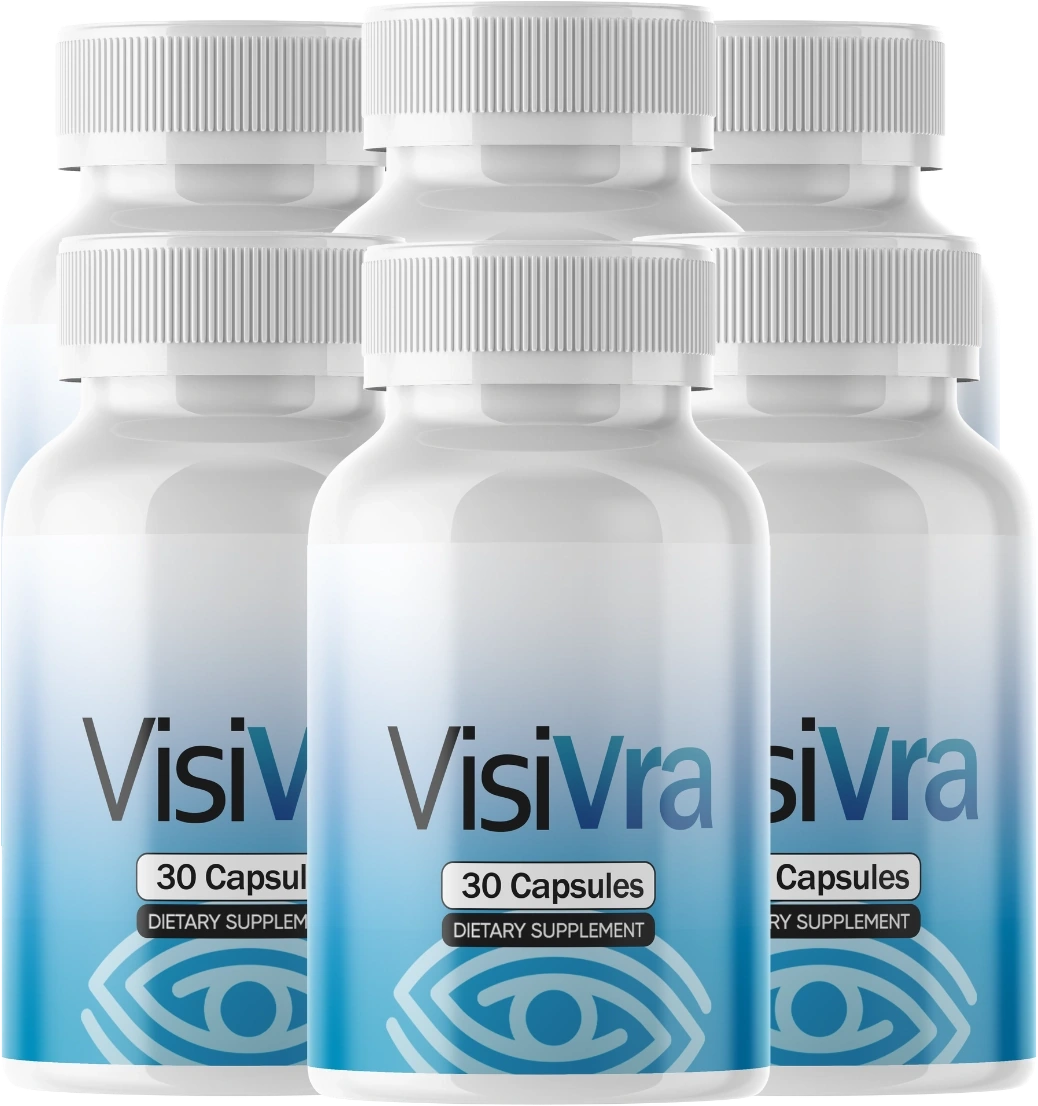
The Visivra front panel prints the wordmark, 30 capsules, the words dietary supplement and an eye glyph. The vendor's ingredient artwork names lutein, zeaxanthin, bilberry extract, astaxanthin, zinc and vitamin A, and its stated supports are visual clarity, healthy retinal function, long-term eye wellness and help defending the eyes from blue-light exposure. None of the supports mentions diabetes or retinopathy, and no amount is printed for any of the six. Three points follow for a reader who has diabetes.
- Any trial result above belongs to its own amount. The trials used specific amounts, alone or in a formula of other ingredients, and a bottle that prints none cannot be matched to any of them.
- Tell the clinicians. The person following your retinas, and the one managing your diabetes, should know what you take. The site's who-it-is-for page says the same.
- The routine does not change. Keep the eye examinations, and keep the medical treatment your team has set. Those are the things the large trials tested.
For the vitamin A and zinc side of the same label, including kidney disease, which often travels with diabetes, see the article on who should ask first. For the healthy-adult evidence for lutein and zeaxanthin, see what the trials measured in people under fifty.
Bring three things: the label and the vendor's ingredient list, the date of your last dilated examination, and your latest HbA1c. Ask two questions. When is my next dilated examination, and is there anything in what I take that you would want me to pause?
Read the evidence first, then decide about Visivra
Six named actives, 30 capsules a bottle, and no printed amounts. If you have diabetes, take the label to the clinician who follows your eyes before you start.
Order VisivraReferences
- Hu BJ, Hu YN, Lin S, Ma WJ, Li XR. Application of lutein and zeaxanthin in nonproliferative diabetic retinopathy. Int J Ophthalmol. 2011;4(3):303-6. PMID 22553667. https://pubmed.ncbi.nlm.nih.gov/22553667/
- Zhang PC, Wu CR, Wang ZL, et al. Effect of lutein supplementation on visual function in nonproliferative diabetic retinopathy. Asia Pac J Clin Nutr. 2017;26(3):406-411. PMID 28429904. https://pubmed.ncbi.nlm.nih.gov/28429904/
- Chous AP, Richer SP, Gerson JD, Kowluru RA. The Diabetes Visual Function Supplement Study (DiVFuSS). Br J Ophthalmol. 2016;100(2):227-34. PMID 26089210. https://pubmed.ncbi.nlm.nih.gov/26089210/
- Moschos MM, Dettoraki M, Tsatsos M, Kitsos G, Kalogeropoulos C. Effect of carotenoids dietary supplementation on macular function in diabetic patients. Eye Vis (Lond). 2017;4:23. PMID 29046877. https://pubmed.ncbi.nlm.nih.gov/29046877/
- Scanlon G, Connell P, Ratzlaff M, et al. Macular pigment optical density is lower in type 2 diabetes, compared with type 1 diabetes and normal controls. Retina. 2015;35(9):1808-16. PMID 25932554. https://pubmed.ncbi.nlm.nih.gov/25932554/
- She CY, Gu H, Xu J, Yang XF, Ren XT, Liu NP. Association of macular pigment optical density with early stage of non-proliferative diabetic retinopathy in Chinese patients with type 2 diabetes mellitus. Int J Ophthalmol. 2016;9(10):1433-1438. PMID 27803860. https://pubmed.ncbi.nlm.nih.gov/27803860/
- Petrovic M, Trenkic M, Veselinovic M, Smiljkovic A, Sokolovic D. Biochemical study of bilberry extract potential in preventing retinal damage in rat model of diabetes induced by streptozotocin/nicotinamide. Life (Basel). 2025;15(7). PMID 40724509. https://pubmed.ncbi.nlm.nih.gov/40724509/
- Huang H, Luo Y, Wang Q, et al. Vaccinium as potential therapy for diabetes and microvascular complications. Nutrients. 2023;15(9). PMID 37432140. https://pubmed.ncbi.nlm.nih.gov/37432140/
- Benlarbi-Ben Khedher M, Hajri K, Dellaa A, et al. Astaxanthin inhibits aldose reductase activity in Psammomys obesus, a model of type 2 diabetes and diabetic retinopathy. Food Sci Nutr. 2019;7(12):3979-3985. PMID 31890176. https://pubmed.ncbi.nlm.nih.gov/31890176/
- D'Angelo A, Lixi F, Vitiello L, Gagliardi V, Pellegrino A, Giannaccare G. The role of diet and oral supplementation for the management of diabetic retinopathy and diabetic macular edema: a narrative review. Biomed Res Int. 2025;2025:6654976. PMID 40041571. https://pubmed.ncbi.nlm.nih.gov/40041571/
- ACCORD Study Group; ACCORD Eye Study Group, Chew EY, Ambrosius WT, Davis MD, et al. Effects of medical therapies on retinopathy progression in type 2 diabetes. N Engl J Med. 2010;363(3):233-44. PMID 20587587. https://pubmed.ncbi.nlm.nih.gov/20587587/
- Chew EY, Davis MD, Danis RP, et al. The effects of medical management on the progression of diabetic retinopathy in persons with type 2 diabetes: the Action to Control Cardiovascular Risk in Diabetes (ACCORD) Eye Study. Ophthalmology. 2014;121(12):2443-51. PMID 25172198. https://pubmed.ncbi.nlm.nih.gov/25172198/
- Action to Control Cardiovascular Risk in Diabetes Follow-On (ACCORDION) Eye Study Group. Persistent effects of intensive glycemic control on retinopathy in type 2 diabetes in the Action to Control Cardiovascular Risk in Diabetes (ACCORD) Follow-On Study. Diabetes Care. 2016;39(7):1089-100. PMID 27289122. https://pubmed.ncbi.nlm.nih.gov/27289122/
- Keech AC, Mitchell P, Summanen PA, et al. Effect of fenofibrate on the need for laser treatment for diabetic retinopathy (FIELD study): a randomised controlled trial. Lancet. 2007;370(9600):1687-97. PMID 17988728. https://pubmed.ncbi.nlm.nih.gov/17988728/
- Diabetes Control and Complications Trial Research Group. The effect of intensive treatment of diabetes on the development and progression of long-term complications in insulin-dependent diabetes mellitus. N Engl J Med. 1993;329(14):977-86. PMID 8366922. https://pubmed.ncbi.nlm.nih.gov/8366922/
- American Diabetes Association Professional Practice Committee. 12. Retinopathy, neuropathy, and foot care: Standards of Care in Diabetes-2026. Diabetes Care. 2026;49(Suppl 1):S261-S276. PMID 41358886. https://pubmed.ncbi.nlm.nih.gov/41358886/
- Lim JI, Kim SJ, Bailey ST, et al. Diabetic Retinopathy Preferred Practice Pattern. Ophthalmology. 2025;132(4):P75-P162. PMID 39918521. https://pubmed.ncbi.nlm.nih.gov/39918521/