Visivra Official Website › Side Effects
Side EffectsDoes Visivra Have Side Effects?
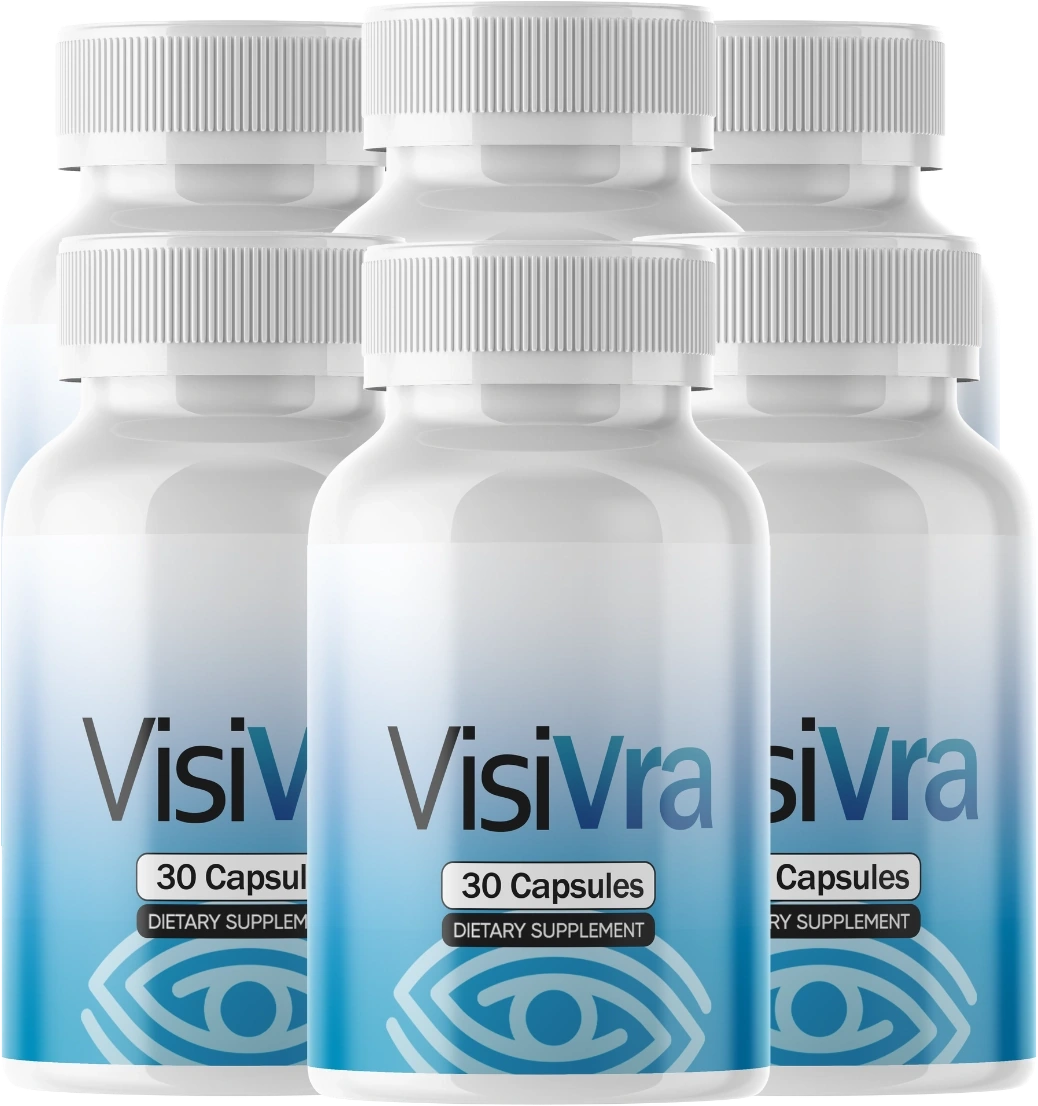
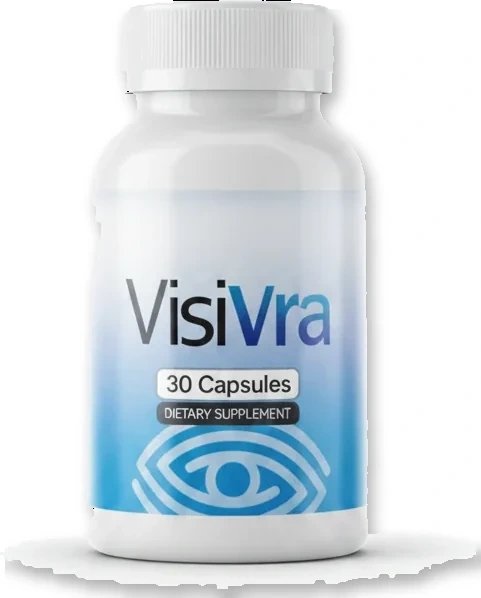
No side effect is printed on the Visivra pack, and the artwork carries no caution line at all.
The six actives have their own published safety records, and two of them carry a ceiling: zinc has a 40 mg upper intake from all sources, and vitamin A behaves differently depending on which form it is. Both are set out in full below.
Every documented caution attached to these six ingredients, named once and in full.
What side effects do people report on Visivra?
The ordinary, mild and mostly digestive end of the record.
The seller's own review summary reports no adverse events. That is a figure worth reproducing and worth qualifying in the same breath: a review widget collects what buyers volunteer, and people who stop taking something rarely come back to say why.
The wider literature on this class of ingredient is reassuring and dull, which is the right combination. Carotenoids taken by mouth at supplement amounts are generally well tolerated. The commonest complaints in trials of this kind are mild and digestive: a little nausea if a capsule is swallowed on an empty stomach, occasional loose stools in the first week, and the usual settling that follows.
One cosmetic effect deserves a mention because it alarms people who have not heard of it. Sustained high intakes of carotenoids can tint the skin, most visibly on the palms and the soles, a condition called carotenodermia. It is harmless, it fades when intake drops, and it happens at intakes well above what a single daily capsule of a six-ingredient formula would be expected to supply.
| Reported effect | How common in this class | What usually settles it |
|---|---|---|
| Mild nausea in the first days | Occasional, mostly on an empty stomach | Taking the capsule with a meal, which also improves absorption |
| Loose stools | Occasional, usually in week one | Time, and consistency of timing |
| A metallic taste | Associated with zinc rather than the carotenoids | Food alongside the capsule |
| Skin tinting on palms and soles | Rare at ordinary supplement intakes | Reducing total carotenoid intake; the effect is reversible |
| Headache | Not specifically associated with these six | Worth mentioning to the order desk if it coincides with starting |
This table describes the ingredient class generally. No trial has been run on this finished formula, so none of it is a measurement of this capsule.
None of the above is the interesting part of this page. The two sections that follow are, because they are the two places where an amount would change the answer and the label gives a name.
The vitamin A question on the Visivra label
Two molecules under one name, two separate research histories, and one call that settles which applies.
Vitamin A is one word covering two different things. Preformed vitamin A means retinol and its esters, which come from animal foods and from supplements. Provitamin A means beta carotene and its relatives, which the body converts as it needs them. MedlinePlus sets the distinction out plainly.
The two behave differently at high intakes, and they behave differently in different people. That is why the form is the first thing to establish about any eye supplement carrying this ingredient.
The beta carotene history. The CARET trial gave beta carotene 30 mg a day together with retinol 25,000 IU to smokers and to workers exposed to asbestos. It was stopped early: the supplemented arm had more lung cancer, not less. The ATBC trial gave beta carotene 20 mg a day to male smokers and found the same direction of effect.
That is the reason AREDS2 rebuilt the original AREDS formula without beta carotene. AREDS2 report 28, the ten-year follow-up, counted 23 lung cancers in the beta carotene arm against 11 in the arm without it, mostly in former smokers, with an odds ratio of 1.82 (95% CI 1.06–3.12; P=.02).
The preformed vitamin A history. High long-term intakes of retinol have their own literature, and it is about bone rather than lung. A Swedish cohort related serum retinol levels to fracture risk, and the Iowa Women's Health Study looked at vitamin A intake and hip fracture in postmenopausal women. The Institute of Medicine chapter sets the adult tolerable upper intake for preformed vitamin A at 3,000 micrograms of retinol activity equivalents a day, and that ceiling applies to the preformed form rather than to beta carotene.
Ask the order desk on +1 (323) 347-4522 which form of vitamin A the capsule uses, and ask before the first bottle. Anyone who smokes or used to smoke should treat that call as the step that decides the purchase. The seller holds the specification; this website holds the label.
Zinc, copper and what the Visivra label leaves to the desk
A real ceiling, the trial that exceeded it deliberately, and why copper travels with zinc.
Zinc is an essential mineral with a genuine ceiling. The Institute of Medicine chapter sets the adult tolerable upper intake at 40 mg a day from all sources combined, which includes food, a multivitamin, a lozenge taken for a cold and an eye formula, all added together.
The original AREDS trial deliberately exceeded that ceiling: 80 mg of zinc a day, given with 2 mg of copper, in a trial population under supervision. AREDS2 later tested a 25 mg arm as well. The copper was not an afterthought. Sustained high zinc intake competes with copper absorption and drives copper status down over months.
What that can look like is documented. A published case describes copper deficiency arising from a sustained excess zinc intake, presenting as a blood abnormality rather than as anything a person would connect to a supplement. A 2026 systematic review collects the haematological toxicities associated with zinc excess.
The other side of the record matters too, and this page prints it rather than only the alarming half. A controlled trial found that zinc supplementation did not alter sensitive biomarkers of copper status in healthy participants. Dose and duration decide which of those two pictures applies.
| Zinc intake a day | Where that figure comes from | What goes with it |
|---|---|---|
| About 11 mg for men, 8 mg for women | The recommended dietary allowance | Ordinary food, no supplement needed |
| 40 mg | The tolerable upper intake for adults from all sources | The ceiling the other rows are measured against |
| 25 mg | The lower-zinc arm AREDS2 tested | Given inside a supervised formula |
| 80 mg | The original AREDS amount | Given with copper 2 mg, on purpose |
Every figure here belongs to a trial or a reference chapter, and each is attributed. None of them is a measurement of a Visivra capsule.
Two practical consequences follow. Anyone already taking zinc in a multivitamin or a separate tablet is adding two contributions toward one ceiling. And anyone planning to take this formula for six months, which is what the top pack buys, has a fair question to put to the order desk about copper. Neither of those is a reason not to buy it; both are reasons to call +1 (323) 347-4522 first.
Bilberry, astaxanthin and the Visivra caution list
The theoretical flag, the quiet record, and the caution line this pack does not carry.
Bilberry extract is the ingredient most often flagged for interaction with anticoagulants, and the honest description of that flag is that it is theoretical rather than demonstrated. Anthocyanin-rich extracts have been shown to affect platelet behaviour in laboratory settings, and the caution travels from there. Anyone taking warfarin or another anticoagulant should mention this capsule to whoever manages that prescription, once, because the monitoring is already in place and a new supplement is ordinary information for it.
Astaxanthin has a quieter record. A review of the compound covers its safety alongside its proposed mechanisms, and the 2025 randomised trial gave 4 mg a day for eighty-four days without reporting a safety signal. Its participants were children, which is context worth carrying rather than a warning.
Lutein and zeaxanthin are the two with the least to say for themselves here, which is a compliment. There is no established upper intake for lutein in the United States, and inventing a ceiling to look careful would be its own kind of dishonesty. AREDS2 ran 10 mg and 2 mg a day for five years.
Most supplement bottles carry a printed caution line, usually some version of asking a clinician before use if pregnant, nursing or under care. This artwork carries the FDA statement and nothing else. That is unusual enough to say once, and it is the reason this page names the interactions in full rather than reproducing a line the pack never printed.
What not to take alongside Visivra
Seven things already in a cabinet, and the specific overlap in each case.
| Already taking | The overlap | The sensible step |
|---|---|---|
| A multivitamin | Zinc and vitamin A, the two rows with a ceiling | Read that label first and add the figures you can see |
| A separate zinc tablet or lozenge | Zinc, toward a 40 mg upper intake | Space them, and ask the order desk what this capsule contributes |
| An AREDS or AREDS2 formula from an eye clinic | Lutein, zeaxanthin and zinc, all three | Tell the clinic that chose the first product about the second |
| A retinoid medicine such as isotretinoin | Preformed vitamin A | The prescriber should know, because retinoids and preformed vitamin A add up |
| Warfarin or another anticoagulant | Bilberry, theoretically | Mention it at the next monitoring appointment |
| A tetracycline or quinolone antibiotic | Zinc binds these in the gut | Separate the two by a couple of hours while the course runs |
| A fat-absorption-reducing agent | The four fat-soluble actives | Expect reduced absorption rather than a hazard |
Each row names the specific overlap rather than restating a general caution. None of these is a prohibition.
The list is short because six actives generate fewer overlaps than twenty-five, and four of the seven rows concern the same two ingredients. That concentration is the useful finding: a person who has settled the zinc and the vitamin A questions has settled most of this page.
What makes these conversations awkward is the missing figure. A prescriber asked about a zinc interaction will want to know how much, and the answer from the artwork is the name. The specification sits with the seller, and +1 (323) 347-4522 reaches the desk that holds it.
When an eye examination matters more than Visivra
Six situations where the useful action is an appointment.
This section is short and it is the most useful one on the page. A supplement is for supporting normal function. Several of the things people buy an eye supplement to fix are not normal function, and the difference is usually obvious once it is written down.
- Sudden changes. A curtain across part of the vision, a shower of new floaters, flashing lights, or sight lost in one eye. These are same-day matters for an eye casualty department, not a supplement question.
- Straight lines that look bent or wavy. That distortion is the classic reason to have the macula examined, and the National Eye Institute describes what an assessment involves.
- Gradual blurring for near work in the forties. That is presbyopia and it is an optical problem with an optical answer.
- Glare at night that has been worsening for months. Cataract is the commonest cause, and the AREDS cataract arm is the trial that looked at whether supplementation changes its course.
- Eye pain, redness that does not settle, or a headache with visual symptoms. These belong to an examination and nothing on this page addresses them.
- No examination in the last two years. That appointment finds the changed prescription and the raised pressure, both of which are treatable and neither of which a capsule touches.
Nothing about buying this product replaces that appointment, and nothing about that appointment prevents buying this product. They answer different questions.
Honest critique: what the Visivra label leaves unanswerable
Three questions the artwork cannot settle, and the one route that can.
Everything above is the published record for six ingredients. What it cannot be is a risk assessment of this capsule, and the reason is the same one that runs through this whole website: the label gives names, and a risk assessment needs figures.
Concretely, three questions cannot be answered from the artwork. How close the zinc comes to the 40 mg upper intake. Whether the vitamin A is preformed or provitamin, which decides which of two research histories applies. Whether copper travels with the zinc, as it did in AREDS.
All three have the same answer: the order desk holds the specification and the number is +1 (323) 347-4522. That is not a deflection. It is the only route that produces a real figure, and it is a two-minute call.
- Six actives, each with a published safety record, and two of them with a ceiling worth knowing.
- The vitamin A form is the first question, and it matters most to anyone who smokes or used to.
- The zinc amount is the second, and it matters most to anyone already taking zinc in something else.
- The 60-day guarantee means a buyer who dislikes the answer to either question has a route back, and the refund policy page sets out exactly what it costs to use.
Visivra safety questions, answered
Does Visivra have any side effects?
No side effect is printed on the pack and the seller's review summary reports none. The ingredient class is generally well tolerated, with mild digestive complaints the commonest report in trials of this kind, usually settled by taking the capsule with a meal.
Is the vitamin A in Visivra safe for smokers?
That depends entirely on the form, which the label leaves open. Beta carotene at high supplemental amounts is the form with the lung cancer history in smokers, from CARET and ATBC, and it is the ingredient AREDS2 removed. Call the order desk on +1 (323) 347-4522 and establish the form before ordering.
How much zinc is in Visivra?
The pack names zinc and leaves the amount to the seller. The figure matters because 40 mg a day from all sources is the adult upper intake, so anyone taking zinc in something else is adding two invisible contributions. The order desk holds the specification.
Can Visivra interact with my medication?
Six specific overlaps are named on this page rather than hedged: zinc with tetracycline and quinolone antibiotics, zinc with other zinc sources, preformed vitamin A with retinoid medicines, bilberry with anticoagulants in theory, the fat-soluble four with fat-absorption agents, and the whole formula with an existing AREDS2 product.
Can Visivra turn my skin orange?
Carotenodermia is a real and harmless tinting of the skin at sustained high carotenoid intakes, most visible on palms and soles, and it reverses when intake falls. It is associated with intakes well above what a single daily capsule would be expected to deliver.
Should I stop taking Visivra before surgery?
The usual advice for any supplement before a planned procedure is to tell the team what is being taken and follow their instruction, which is normally to stop a week or two beforehand. The bilberry platelet question is the reason it is worth mentioning at all.
Is Visivra safe to take long term?
The top pack buys six months, so the question is a fair one. The carotenoid pair has been given for five years in a trial setting. The two ingredients where duration interacts with amount are zinc, because copper falls over months rather than days, and preformed vitamin A, because its ceiling is a cumulative one.
Does Visivra carry a warning label?
The artwork carries the FDA statement and no separate caution line, which is unusual in this category. That is why every interaction on this page is named in full here rather than summarised as a line the pack never printed.
Sources behind the Visivra safety record
Every trial, case report and reference chapter named above.
- Age-Related Eye Disease Study 2 (AREDS2) Research Group. Lutein + zeaxanthin and omega-3 fatty acids for age-related macular degeneration: the Age-Related Eye Disease Study 2 (AREDS2) randomized clinical trial. JAMA. 2013;309(19):2005-15. PMID 23644932. https://pubmed.ncbi.nlm.nih.gov/23644932/
- Age-Related Eye Disease Study Research Group. A randomized, placebo-controlled, clinical trial of high-dose supplementation with vitamins C and E, beta carotene, and zinc for age-related macular degeneration and vision loss: AREDS report no. 8. Arch Ophthalmol. 2001;119(10):1417-36. PMID 11594942. https://pubmed.ncbi.nlm.nih.gov/11594942/
- Dutta A, Chaudhary V, Kumari S, et al. Zinc-induced hematologic toxicities: a systematic review of descriptive studies. Biol Trace Elem Res. 2026;204(9):6628-6642. PMID 42087025. https://pubmed.ncbi.nlm.nih.gov/42087025/
- Amisha F, Saluja P, Gautam N, et al. Acquired hyperzincaemia due to zinc-laden denture adhesives leading to hypocupraemia as a cause of neutropenia. Eur J Case Rep Intern Med. 2021;8(11):002983. PMID 34912740. https://pubmed.ncbi.nlm.nih.gov/34912740/
- Bertinato J, Simpson JR, Sherrard L, et al. Zinc supplementation does not alter sensitive biomarkers of copper status in healthy boys. J Nutr. 2013;143(3):284-9. PMID 23303874. https://pubmed.ncbi.nlm.nih.gov/23303874/
- Institute of Medicine (US) Panel on Micronutrients. Zinc. In: Dietary Reference Intakes for Vitamin A, Vitamin K, Arsenic, Boron, Chromium, Copper, Iodine, Iron, Manganese, Molybdenum, Nickel, Silicon, Vanadium, and Zinc. Washington (DC): National Academies Press; 2001. https://www.ncbi.nlm.nih.gov/books/NBK222317/
- Omenn GS, Goodman GE, Thornquist MD, et al. Effects of a combination of beta carotene and vitamin A on lung cancer and cardiovascular disease. N Engl J Med. 1996;334(18):1150-5. PMID 8602180. https://pubmed.ncbi.nlm.nih.gov/8602180/
- Alpha-Tocopherol, Beta Carotene Cancer Prevention Study Group. The effect of vitamin E and beta carotene on the incidence of lung cancer and other cancers in male smokers. N Engl J Med. 1994;330(15):1029-35. PMID 8127329. https://pubmed.ncbi.nlm.nih.gov/8127329/
- Chew EY, Clemons TE, Agron E, et al. Long-term outcomes of adding lutein/zeaxanthin and omega-3 fatty acids to the AREDS supplements on age-related macular degeneration progression: AREDS2 report 28. JAMA Ophthalmol. 2022;140(7):692-698. PMID 35653117. https://pubmed.ncbi.nlm.nih.gov/35653117/
- Michaelsson K, Lithell H, Vessby B, et al. Serum retinol levels and the risk of fracture. N Engl J Med. 2003;348(4):287-94. PMID 12540641. https://pubmed.ncbi.nlm.nih.gov/12540641/
- Lim LS, Harnack LJ, Lazovich D, et al. Vitamin A intake and the risk of hip fracture in postmenopausal women: the Iowa Women's Health Study. Osteoporos Int. 2004;15(7):552-9. PMID 14760518. https://pubmed.ncbi.nlm.nih.gov/14760518/
- Institute of Medicine (US) Panel on Micronutrients. Vitamin A. In: Dietary Reference Intakes for Vitamin A, Vitamin K, Arsenic, Boron, Chromium, Copper, Iodine, Iron, Manganese, Molybdenum, Nickel, Silicon, Vanadium, and Zinc. Washington (DC): National Academies Press; 2001. https://www.ncbi.nlm.nih.gov/books/NBK222318/
- MedlinePlus Medical Encyclopedia. Vitamin A. U.S. National Library of Medicine. https://medlineplus.gov/ency/article/002400.htm
- Hecht KA, Marwah M, Wood V, et al. Astaxanthin (AstaReal) improved acute and chronic digital eye strain in children: a randomized double-blind placebo-controlled trial. Adv Ther. 2025;42(4):1811-1833. PMID 40014233. https://pubmed.ncbi.nlm.nih.gov/40014233/
- Kidd P. Astaxanthin, cell membrane nutrient with diverse clinical benefits and anti-aging potential. Altern Med Rev. 2011;16(4):355-64. PMID 22214255. https://pubmed.ncbi.nlm.nih.gov/22214255/
- Age-Related Eye Disease Study Research Group. A randomized, placebo-controlled, clinical trial of high-dose supplementation with vitamins C and E and beta carotene for age-related cataract and vision loss: AREDS report no. 9. Arch Ophthalmol. 2001;119(10):1439-52. PMID 11594943. https://pubmed.ncbi.nlm.nih.gov/11594943/
- National Eye Institute. Age-Related Macular Degeneration (AMD). National Institutes of Health. https://www.nei.nih.gov/learn-about-eye-health/eye-conditions-and-diseases/age-related-macular-degeneration
Order Visivra once the two questions are answered
The vitamin A form and the zinc amount are both a telephone call away, and the 60-day guarantee covers the decision either way.
Two bottles $158 · six bottles $294 · 60-day money-back guarantee
Order Visivra On The Official Website30 capsules a bottle · lot VIS-26/MY-3811 · ships from the U.S.