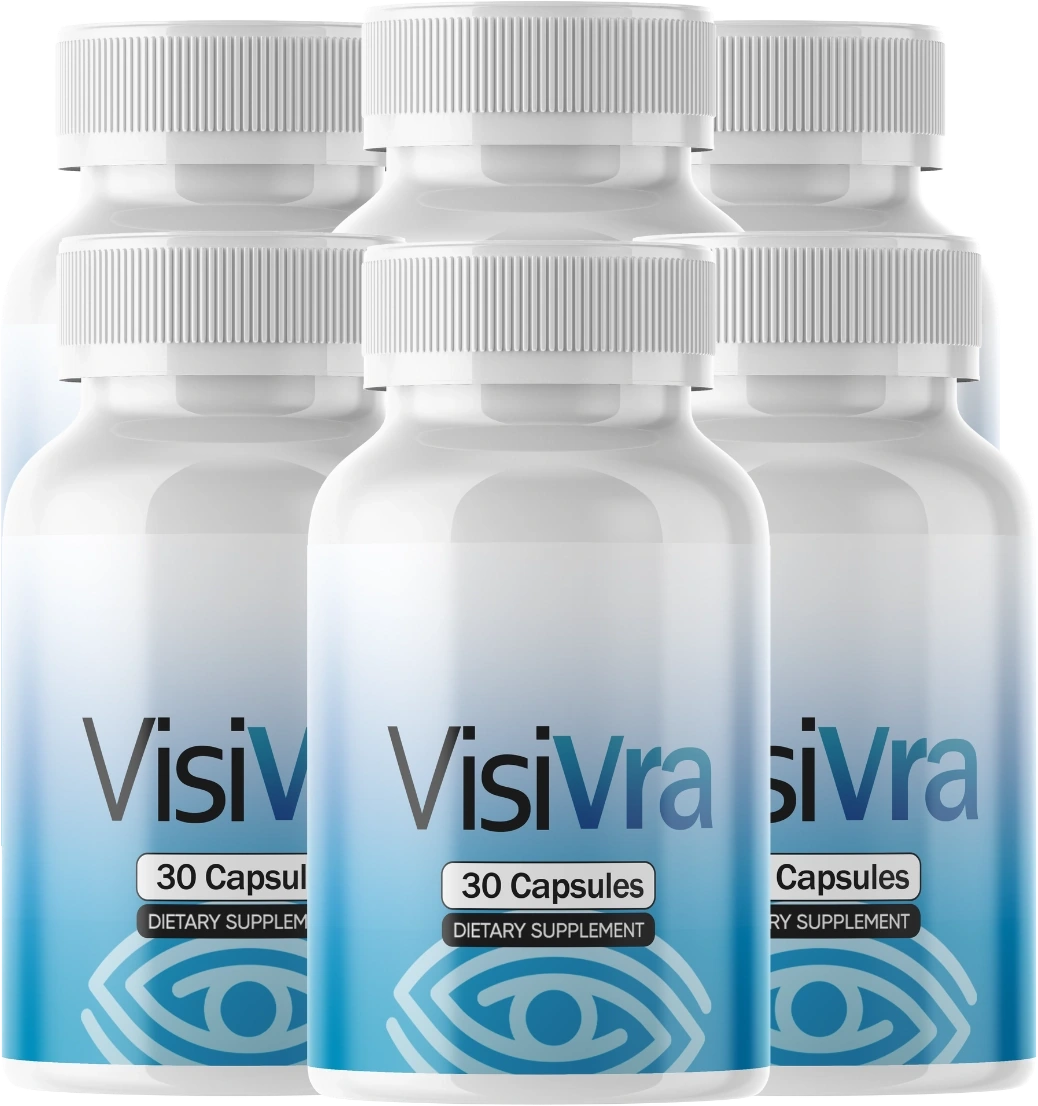
Visivra Official Website › Results Timeline
Results TimelineHow Long Does Visivra Take To Work?
Judge Visivra at sixty days, which is also the length of the guarantee.
The seller describes a typical wait of 3–6 weeks. The trials behind these six ingredients ran eight weeks at the shortest and five years at the longest, and the macular pigment measurements move over months rather than days.
What the published trials would predict week by week, and how to measure it honestly.
Why Visivra is slower than people expect
Three of the six accumulate, and accumulation has a speed nobody can shorten.
Three of the six ingredients work by accumulating, and accumulation has a speed. Lutein and zeaxanthin have to be absorbed with dietary fat, carried on lipoproteins, taken up selectively by the macula and laid down as pigment. Every step there is a process measured in weeks.
A 2020 randomised trial tracked macular pigment optical density and contrast sensitivity together and reports on that timescale. CREST ran twelve months before it measured its result. AREDS2 ran five years. Nobody in this field designs an eight-day study, because there would be nothing to measure at the end of it.
The other three move faster in principle. Bilberry's trials ran eight and twelve weeks, astaxanthin's ran eighty-four days, and zinc's role in the visual cycle is continuous rather than cumulative. Even the quick end of this formula is measured in weeks.
The Visivra timeline, week by week
Seven checkpoints, what each one is based on, and what to record at it.
| When | What the research would predict | What to write down |
|---|---|---|
| Days 1–7 | Nothing measurable. Carotenoid blood levels have barely begun to move, and macular pigment has not changed. | The baseline: screen hours, end-of-day comfort out of five, glare recovery in seconds. |
| Weeks 2–3 | Blood carotenoid levels rising. Nothing visible follows from that yet, and nothing should be expected to. | Whether the routine has stuck. Missed days now are the commonest reason a course fails later. |
| Weeks 4–6 | The window the seller describes as typical for buyers to notice anything, and the first honest checkpoint. | The same three measurements as day one, written the same way. |
| Weeks 7–8 | The shortest published bilberry trial finished here, at 480 mg a day in screen workers. | Whether end-of-day comfort has moved at all, and whether screen hours changed too. |
| Weeks 9–12 | The twelve-week ciliary-muscle trial at 240 mg a day finished in this band, and the astaxanthin study at day 84. | The three measurements again. Three data points beat two. |
| Months 4–6 | The pigment trials are still running at this point. The six-bottle pack covers this stretch. | Whether it is worth continuing, and whether an optometrist could measure macular pigment directly. |
| Year one and beyond | CREST measured at twelve months. AREDS2 ran five years in a different population altogether. | Nothing new to write; this is the horizon the long-term support claim belongs to. |
The middle column reports what the published studies on these six ingredients chose to measure and when. None of it forecasts what any individual will notice.
Day one carries the most weight of any row in that table, which is counter-intuitive because nothing is supposed to happen on it. Three figures written down before the first capsule are what make every later row comparable, and the how to take it page sets out what those three are.
How the 60-day Visivra guarantee lines up with the timeline
Why sixty days is the right test, and what it does not cover.
Sixty days is a well-chosen window for this category and it is worth saying why. It is long enough to pass the seller's own 3–6 weeks band with room to spare, long enough to clear the eight-week bilberry trial, and it reaches the edge of the twelve-week band where two more studies finished.
It is also exactly two bottles. The entry tier on this ladder is two bottles, sixty capsules, sixty days, and the guarantee runs sixty days from the date of purchase. Those three numbers meeting is the most practical thing about the pricing on this site.
What sixty days does not reach is the pigment measurement. CREST measured at twelve months and AREDS2 at five years. Anyone buying this formula for the long-term support claim is buying beyond the window, which is a reasonable thing to do with eyes open and an unreasonable thing to do by accident.
| Pack | Days it covers | Where that lands on the timeline | Guarantee overlap |
|---|---|---|---|
| 2 Bottles | 60 days | The seller's typical band, the eight-week bilberry trial, and the end of the window | 60 days of 60 |
| 3 Bottles | 90 days | Through the twelve-week band where two trials finished | 60 days of 90 |
| 6 Bottles | 180 days | Six months, four months past the window | 60 days of 180 |
The guarantee runs from the date of purchase rather than from the day a bottle is opened, so a six-bottle pack spends most of its life outside the window.
The consequence is simple and it is on the guarantee page in full: the decision about whether this formula suits has to be made inside sixty days regardless of which pack was bought.
What can actually be measured while taking Visivra
Six things a person can track, in descending order of how much they prove.
Macular pigment optical density
The only instrumented measurement in this whole category, and some optometrists offer it. A reading before starting and another at six months is a real before-and-after. The trials that track it are the ones this ingredient pair is judged on.
Contrast sensitivity
A chart test, distinct from the letters chart, and the endpoint CREST chose. An optometrist can run it, and it is the measurement behind the phrase visual clarity.
Glare recovery, counted in seconds
Not a clinical measure, but a consistent one if the same situation is used each time: headlights on the same stretch of road, counted rather than described.
End-of-day comfort, out of five
The crudest measurement here and the one most affected by everything else in a day. It is worth recording precisely because it is the one people otherwise recall wrongly.
Screen hours
Not a result; a confounder. Recording it is what stops a good week at the screen being read as an effect of a capsule.
An eye examination
The measurement that outranks all five above, because it finds the causes a supplement does not address. The National Eye Institute describes what an assessment covers.
What makes a Visivra result hard to read
Five variables that move the same numbers, and how to stop each one taking the credit.
| The variable | Which measurement it moves | How to keep it from fooling you |
|---|---|---|
| Hours at a display | Everything on the eye-strain side of the record | Log the number beside every result, so a quiet fortnight at work is not read as an effect |
| Nights of short sleep | End-of-day comfort, strongly | Note any week with two or more, and discount that week |
| The spectacle prescription | Focusing effort, blur, headaches | Have it checked before starting, not during |
| Time of year | Glare, daylight hours, indoor air | Compare day 30 and day 60 against day 0, never against a memory |
| Having just paid for it | Every self-reported figure, in week one | Write the baseline down before the first capsule and do not revise it |
Five variables, each capable of producing a change a capsule would get credit for. Only the first is easy to measure and it is the one that matters most.
A single habit neutralises most of that column: record the screen hours on the same line as the score. A number that improved in a week when work eased off has an obvious second explanation, and a number that improved while screen hours held steady is worth something.
The fourth row is the one people forget. A course started in early November finishes in January, by which point daylight, indoor heating and driving conditions have all changed. Comparing against the written baseline rather than against an impression is what keeps that from mattering.
Honest dosage analysis: what could make Visivra take longer
The timelines above belong to stated trial amounts, and this label leaves the figure open.
Every timescale on this page comes from a trial that used a stated amount. AREDS2 gave lutein 10 mg and zeaxanthin 2 mg. The bilberry studies gave 240 mg and 480 mg. The astaxanthin trial gave 4 mg. Those amounts are the reason the timelines look the way they do.
Quantity changes pace. A formula supplying a fraction of what a trial gave has further to travel to reach the same place, and the Visivra label leaves that figure to the seller. That is the one qualification every checkpoint above rests on, and it is made here rather than repeated at each of them.
It is also the practical argument for the 60-day window. A reader who cannot do the arithmetic in advance can still run the experiment: baseline, sixty days, the same three measurements, and a decision either way while the guarantee is open.
- Week one is a baseline, not a test.
- The seller's own typical band is 3–6 weeks, and the first honest checkpoint is week four to six.
- Sixty days clears the shortest published trial on any of these ingredients and matches the guarantee exactly.
- The pigment measurements belong to a twelve-month horizon, which is beyond any refund window in this category.
Visivra timeline questions, answered
How long does Visivra take to work?
The seller describes a typical wait of 3–6 weeks, and the first honest checkpoint on this page is week four to six. The published trials on these ingredients ran eight weeks at the shortest.
Should I feel anything in the first week of Visivra?
No, and expecting to is the commonest reason a bottle gets abandoned. Week one is for establishing the routine and writing the baseline down.
What if nothing has changed after sixty days of Visivra?
That is what the 60-day guarantee is for, and the refund policy page sets out the five steps in order. Return postage is the buyer's cost, which is worth knowing before starting.
Does Visivra work faster at a higher dose?
There is no directions line on this pack licensing a second capsule, so this website describes one a day. Doubling an amount that has not been published is the one change a buyer should not make alone.
Which Visivra pack matches the timeline best?
Two bottles is sixty days, which is the guarantee exactly, and it is the pack that fits inside the window. Six bottles is the cheapest per bottle and covers the twelve-week band comfortably, at the cost of most of it sitting outside the window.
Can an optometrist measure whether Visivra is doing anything?
Macular pigment optical density is measurable and some practices offer it, which makes a before-and-after reading possible. Contrast sensitivity is also a chart test rather than an impression. Those two are the only instrumented options here.
Sources behind the Visivra timeline
Every trial named above, with the duration each one ran for.
- Age-Related Eye Disease Study 2 (AREDS2) Research Group. Lutein + zeaxanthin and omega-3 fatty acids for age-related macular degeneration: the Age-Related Eye Disease Study 2 (AREDS2) randomized clinical trial. JAMA. 2013;309(19):2005-15. PMID 23644932. https://pubmed.ncbi.nlm.nih.gov/23644932/
- Nolan JM, Power R, Stringham J, et al. Enrichment of macular pigment enhances contrast sensitivity in subjects free of retinal disease: Central Retinal Enrichment Supplementation Trials - report 1. Invest Ophthalmol Vis Sci. 2016;57(7):3429-39. PMID 27367585. https://pubmed.ncbi.nlm.nih.gov/27367585/
- Machida N, Kosehira M, Kitaichi N. Clinical effects of dietary supplementation of lutein with high bio-accessibility on macular pigment optical density and contrast sensitivity: a randomized double-blind placebo-controlled parallel-group comparison trial. Nutrients. 2020;12(10):2966. PMID 32998324. https://pubmed.ncbi.nlm.nih.gov/32998324/
- Kosehira M, Machida N, Kitaichi N. A 12-week-long intake of bilberry extract (Vaccinium myrtillus L.) improved objective findings of ciliary muscle contraction of the eye: a randomized, double-blind, placebo-controlled, parallel-group comparison trial. Nutrients. 2020;12(3):600. PMID 32106548. https://pubmed.ncbi.nlm.nih.gov/32106548/
- Ozawa Y, Kawashima M, Inoue S, et al. Bilberry extract supplementation for preventing eye fatigue in video display terminal workers. J Nutr Health Aging. 2015;19(5):548-54. PMID 25923485. https://pubmed.ncbi.nlm.nih.gov/25923485/
- Hecht KA, Marwah M, Wood V, et al. Astaxanthin (AstaReal) improved acute and chronic digital eye strain in children: a randomized double-blind placebo-controlled trial. Adv Ther. 2025;42(4):1811-1833. PMID 40014233. https://pubmed.ncbi.nlm.nih.gov/40014233/
- Lem DW, Gierhart DL, Davey PG. Can nutrition play a role in ameliorating digital eye strain? Nutrients. 2022;14(19):4005. PMID 36235656. https://pubmed.ncbi.nlm.nih.gov/36235656/
- Evans JR, Lawrenson JG. Antioxidant vitamin and mineral supplements for slowing the progression of age-related macular degeneration. Cochrane Database Syst Rev. 2023;9(9):CD000254. PMID 37702300. https://pubmed.ncbi.nlm.nih.gov/37702300/
- National Eye Institute. Age-Related Eye Disease Studies (AREDS/AREDS2). National Institutes of Health. https://www.nei.nih.gov/research/clinical-trials/age-related-eye-disease-studies-aredsareds2
- National Eye Institute. Age-Related Macular Degeneration (AMD). National Institutes of Health. https://www.nei.nih.gov/learn-about-eye-health/eye-conditions-and-diseases/age-related-macular-degeneration
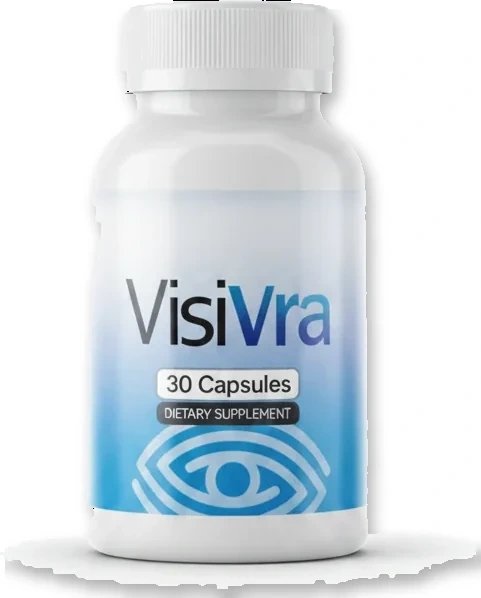
Order Visivra and start the clock with a baseline
Two bottles is sixty capsules, sixty days and the full length of the 60-day guarantee, which is the shortest honest test of an eye formula.
Two bottles $158 · six bottles $294 · 60-day money-back guarantee
Order Visivra On The Official Website30 capsules a bottle · lot VIS-26/MY-3811 · ships from the U.S.