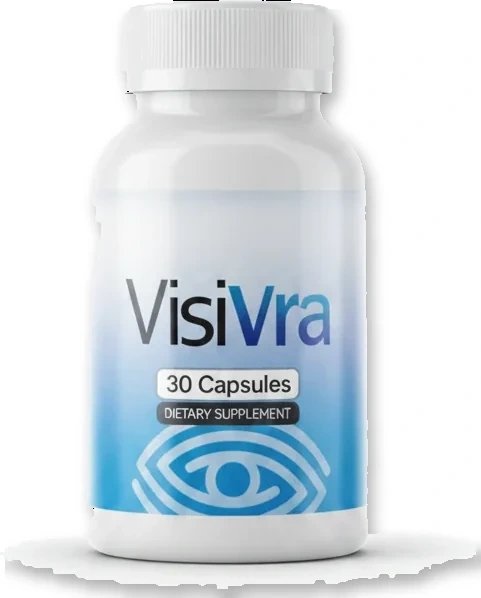
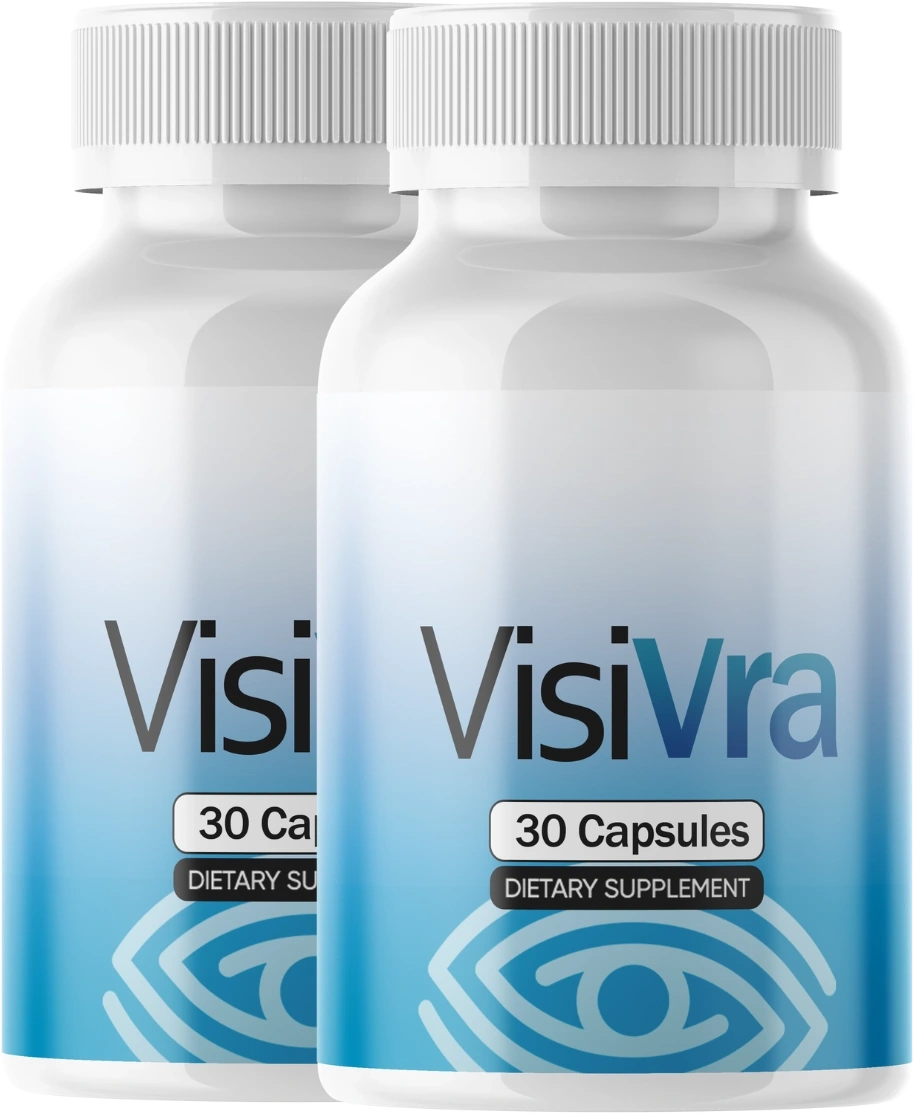
Lot VIS-26/MY-3811 · 30 capsules · front label as shipped
Visivra Official Website: Eye Support with Lutein and Zeaxanthin
Visivra is a daily eye-support capsule, thirty to a bottle.
The bottle names six actives: lutein, zeaxanthin, bilberry extract, astaxanthin, zinc and vitamin A. It gives an amount for none of them, and there is no serving size on the label. Packs run $49 to $79 a bottle with a 60-day guarantee.
This page covers what the six actives are, the amount each one was studied at, how long an eye formula takes to judge, what it costs on the official website, what buyers report, and how the 60-day guarantee works.
- 30 capsules a bottle
- 2, 3 or 6 bottle packs
- 3–6 weeks typical wait
- 60-day guarantee
Visivra at a glance: the bottle in seven lines
Seven lines that answer most of what a buyer wants before scrolling.
| What the bottle says | Detail |
|---|---|
| Form | A capsule. The front panel prints 30 Capsules and Dietary Supplement, so a bottle is a month at one a day. |
| Serving size | None is printed. The seller sells two bottles as sixty days, three as ninety and six as a hundred and eighty, which puts the daily amount at one capsule. |
| Named actives | Six: lutein, zeaxanthin, bilberry extract, astaxanthin, zinc and vitamin A. |
| Amounts | None of the six carries a milligram figure, on the bottle, in the vendor's ingredient artwork or on the seller's own page. |
| What the label claims | support visual clarity; promote healthy retinal function; maintain long-term eye wellness; help defend the eyes from blue light exposure. |
| What it is not | Not a medicine, not the AREDS2 formula, and not a treatment for macular degeneration, cataract or glaucoma. |
| Price and guarantee | $49 to $79 a bottle depending on the pack, with a 60-day money-back guarantee from the date of purchase. |
Read from the printed label artwork and the seller’s own pack page on 18 September 2026.
Why people look for an eye supplement like Visivra
Two different reasons people start, and the one trial the whole category leans on.
Two things usually send somebody looking. The first is a day that ends with tired, gritty eyes after nine hours of screens. The second is a birthday: somewhere after fifty, small print gets further away and headlights get brighter at night.
Those are different problems with different answers, and an eye supplement sits in a different place for each. Screen fatigue is a comfort question, and the trials that measure it run eight to twelve weeks. Age-related change is a long question, and the one supplement finding that matters there came out of a trial that ran for five years in people who already had a diagnosis.
That trial is worth naming early, because almost everything sold in this category borrows its reputation. AREDS2 gave 10 mg of lutein and 2 mg of zeaxanthin a day to people with intermediate age-related macular degeneration and measured whether fewer of them progressed to the late form. The National Eye Institute sets out what that condition is and who is at risk of it.
What the same body of evidence does not show is that a healthy eye sees better on a supplement. The Cochrane review of prevention went looking for exactly that and found no evidence that antioxidant vitamins stop macular degeneration starting. So the sensible order is: have the eyes looked at, get the prescription right, then decide whether a daily capsule has a job to do alongside that.
What is Visivra?
The short version, and the one thing about this label worth knowing early.
Visivra is a capsule sold in a 30-capsule bottle, which makes a bottle a month at one a day. The front panel carries the VisiVra wordmark, the count, the words Dietary Supplement and an eye glyph. This website is the U.S. stocking partner for it, not the maker.
Six actives are named, and they are named in three places that agree: the vendor's ingredient artwork, the seller's own sales page, and the ingredient illustrations on its how-it-works graphic. Lutein, zeaxanthin, bilberry extract, astaxanthin, zinc and vitamin A.
Those six are a recognisable shape. Lutein and zeaxanthin are the two carotenoids that make up macular pigment; bilberry and astaxanthin are the two the screen-fatigue trials use; zinc and vitamin A are the two nutrients the retina genuinely runs on. Somebody who knows the category chose this list.
What the list has not been given is numbers. There is no Supplement Facts panel on the bottle, in the artwork or on the seller's page, so the six names arrive without a milligram beside any of them. That single fact shapes the dosage section below, and it is dealt with there rather than repeated through the page.
Why buy Visivra from the official website?
Six practical differences, none of them about the formula itself.
The guarantee belongs to the desk you bought from
The 60-day money-back window is a policy of this desk and the seller behind it. A bottle bought from a marketplace reseller is covered by that reseller's policy, whatever it turns out to be.
The ladder starts at two bottles
There is no single-bottle tier on this seller's page. Two bottles is sixty days, which is exactly the length of the 60-day window, so the smallest pack and the refund deadline line up precisely.
Shipping is stated where the seller states it
Three and six-bottle packs add $9.99 inside the United States. The two-bottle tier shows its shipping at the checkout, and this site prints that rather than a figure nobody published.
The lot is traceable
Bottles shipped from here carry lot VIS-26/MY-3811 with certificate reference VIS-3811-26-MY. Those are filing references rather than laboratory proof, and the batch page is candid about the difference.
The order desk answers a phone
Tracking, changes and refunds go through the order desk on +1 (323) 347-4522 or [email protected]. The website address handles the pages, typos and corrections, and it cannot see an order.
The label is published here in full, including the gaps
Everything the artwork prints is reproduced on this site, and where a figure is missing the dosage section prints the amount the research used instead. That is more than the seller's own page does.
How does Visivra work?
Three ideas on one label, with three different weights of evidence behind them.
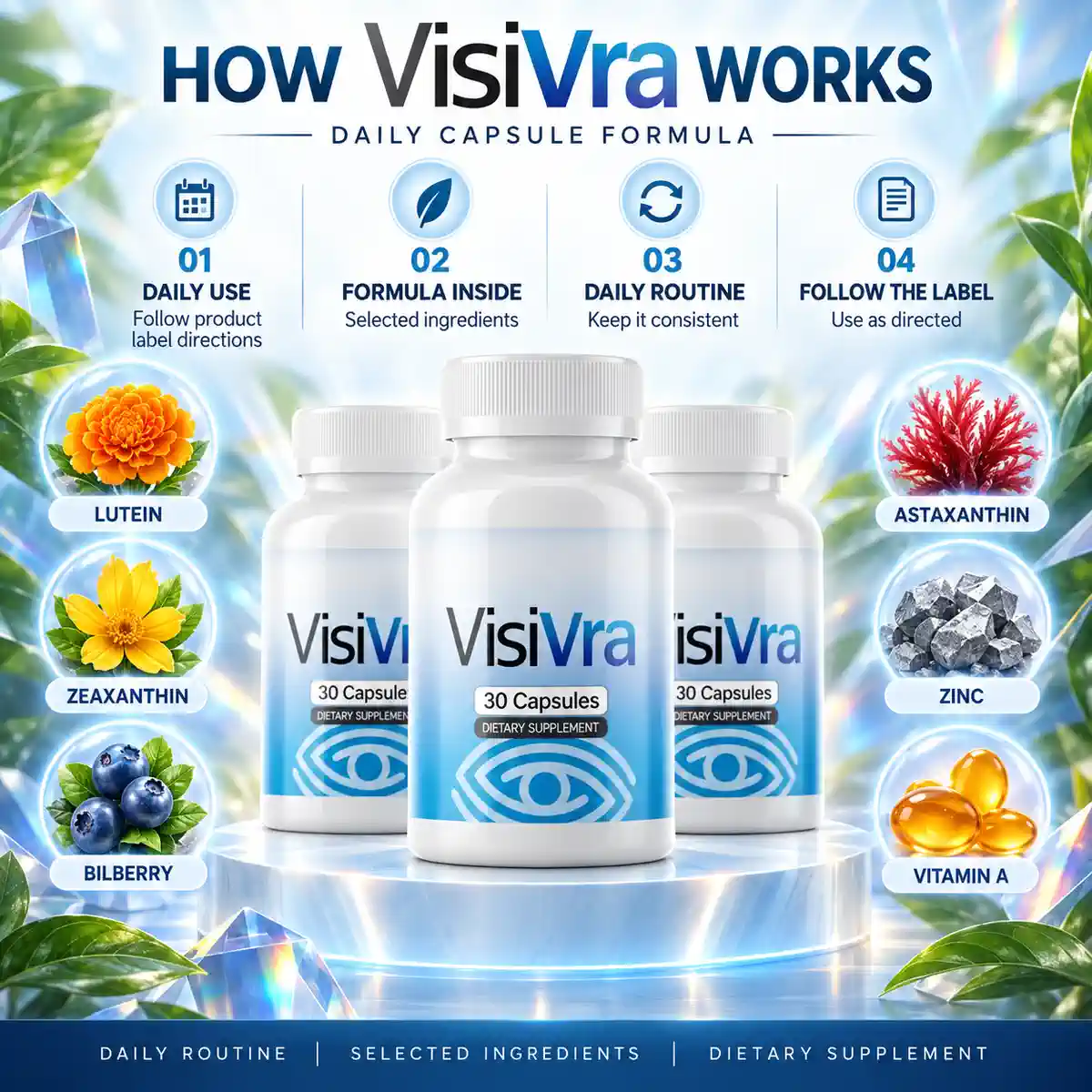
Three separate ideas are stacked on this label, and the evidence behind them is not equally strong. The supplier's own diagram sets out four steps and names the six ingredients; what follows is this desk's account, taken from the trials.
The pigment pathway: lutein and zeaxanthin
These two are the only carotenoids the human eye concentrates at the macula, where they sit as a yellow filter in front of the photoreceptors. Supplementing them raises the density of that filter, and the density is measurable: in the CREST trial, people with healthy retinas took 10 mg of lutein with 2 mg of zeaxanthin and 10 mg of meso-zeaxanthin for a year and their contrast sensitivity improved against placebo. A second trial found the same direction of effect on contrast and on lateral inhibition, and a Japanese trial tracked pigment density and contrast together over the same span.
The fatigue pathway: bilberry and astaxanthin
This is the screen-work end of the label. Bilberry anthocyanins and astaxanthin have both been tested against the symptoms a long day at a monitor produces, and the trials are short, small and reasonably consistent. A twelve-week bilberry trial measured ciliary muscle contraction, which is the machinery that changes focus, and found an objective difference at 240 mg a day. A trial in display-terminal workers used 480 mg. On the other side of the label, a 2025 randomised trial gave 4 mg of astaxanthin a day for eighty-four days and reported less acute and chronic digital eye strain, in children rather than adults, and a 2022 review puts the whole nutrition-and-screen-strain question in context.
The nutrient pathway: zinc and vitamin A
The last two are not exotic at all: they are the nutrients the retina runs on. Vitamin A is the backbone of rhodopsin, the pigment that lets the eye work in low light, and MedlinePlus sets out that role plainly. Zinc is a cofactor in the enzymes that recycle it, which is why the original AREDS formula carried 80 mg of zinc alongside its antioxidants. Both matter most to someone who is short of them, and both have a ceiling, which is why the safety section treats them together.
None of them is a mechanism for reversing sight loss or for treating an eye disease. The 2023 Cochrane review covers what antioxidant supplements have been shown to do, which is to slow progression in people who already have macular degeneration, at the AREDS amounts. A supplement supports normal function. An eye examination finds the things that need finding.
What are the ingredients in Visivra?
Six actives, what each one does, and the amount the trials behind it used.
Six actives, each named and none of them quantified. Below, what each one is, what the research on it found, and the amount the research used.
Lutein
from marigold, Tagetes erectaNo amount on the labelThe lead carotenoid in macular pigment and the most-studied ingredient in the category. AREDS2 gave 10 mg a day for five years to more than four thousand people with intermediate macular degeneration, and its secondary analysis found lutein and zeaxanthin a safer and slightly more effective substitute for the beta carotene the original formula used. A 2019 meta-analysis and a 2014 one both report improvements in macular pigment density and visual function on supplementation. Two practical details the label cannot tell you: the form matters, since free lutein and lutein esters are absorbed differently, and so does the meal, because carotenoid absorption rises with the fat eaten alongside it.
Zeaxanthin
the macula's second carotenoidNo amount on the labelLutein's partner, and the one that sits closest to the centre of the macula. It travels with lutein in every trial worth citing: AREDS2 used 2 mg a day beside its 10 mg of lutein, and a head-to-head randomised trial compared formulations built around the pair. Dose response has been looked at directly, in a comparison of zeaxanthin levels in patients with high myopia, which found pigment density tracking the amount given. Five parts lutein to one part zeaxanthin is the ratio the evidence is built on, and a label that names both without numbers cannot be held to it.
Bilberry Extract
Vaccinium myrtillus, fruitNo amount on the labelThe European blueberry, standardised for its anthocyanins. Its modern evidence is about eye comfort rather than eyesight: 240 mg a day for twelve weeks produced an objective change in ciliary muscle contraction, and 480 mg a day for eight weeks reduced eye fatigue in people working at display terminals. The famous story about bilberry jam and Royal Air Force night vision is a different matter: a systematic review of placebo-controlled trials found the positive results were the uncontrolled ones. It is on this label for the fatigue work, and one combination trial pairs it with lutein much as this formula does.
Astaxanthin
from Haematococcus pluvialisNo amount on the labelThe red carotenoid that colours salmon and krill, and the newest name on this list. The cleanest evidence is a 2025 randomised double-blind trial of 4 mg a day for eighty-four days, which reported improvement in both acute and chronic digital eye strain. Its participants were children, which is worth saying about a capsule sold to adults. A three-carotenoid trial tested it alongside anthocyanin and lutein over six weeks, which is closer to the shape of this formula, and a review of its wider clinical record covers what else has been claimed for it. The accommodation studies the astaxanthin trade quotes most often could not be retrieved from PubMed for this site, so they are not cited here.
Zinc
form not statedNo amount on the labelAn essential mineral, and the one on this label with a real ceiling. AREDS used 80 mg a day, which is twice the adult tolerable upper intake level of 40 mg that the Institute of Medicine set, and it was given under trial supervision with copper alongside it. Sustained high-dose zinc lowers copper: a documented case traces neutropenia to exactly that chain, while a controlled trial in healthy boys found no change in copper status at ordinary supplemental amounts, and a 2026 systematic review gathers the haematological effects reported at high ones. Everything in that paragraph depends on the amount, which this label does not give.
Vitamin A
form not statedNo amount on the labelThe nutrient the retina cannot work without, and the entry on this label that raises the sharpest question, because vitamin A on a supplement means one of two quite different things. As retinol it has an adult upper intake level of 3,000 micrograms and a long observational record at high intakes, including a Swedish cohort and the Iowa Women's Health Study, both on fracture risk. As beta carotene it is the ingredient AREDS2 deliberately took out. That decision, and the two trials behind it, are set out in the dosage section. MedlinePlus covers the nutrient itself.
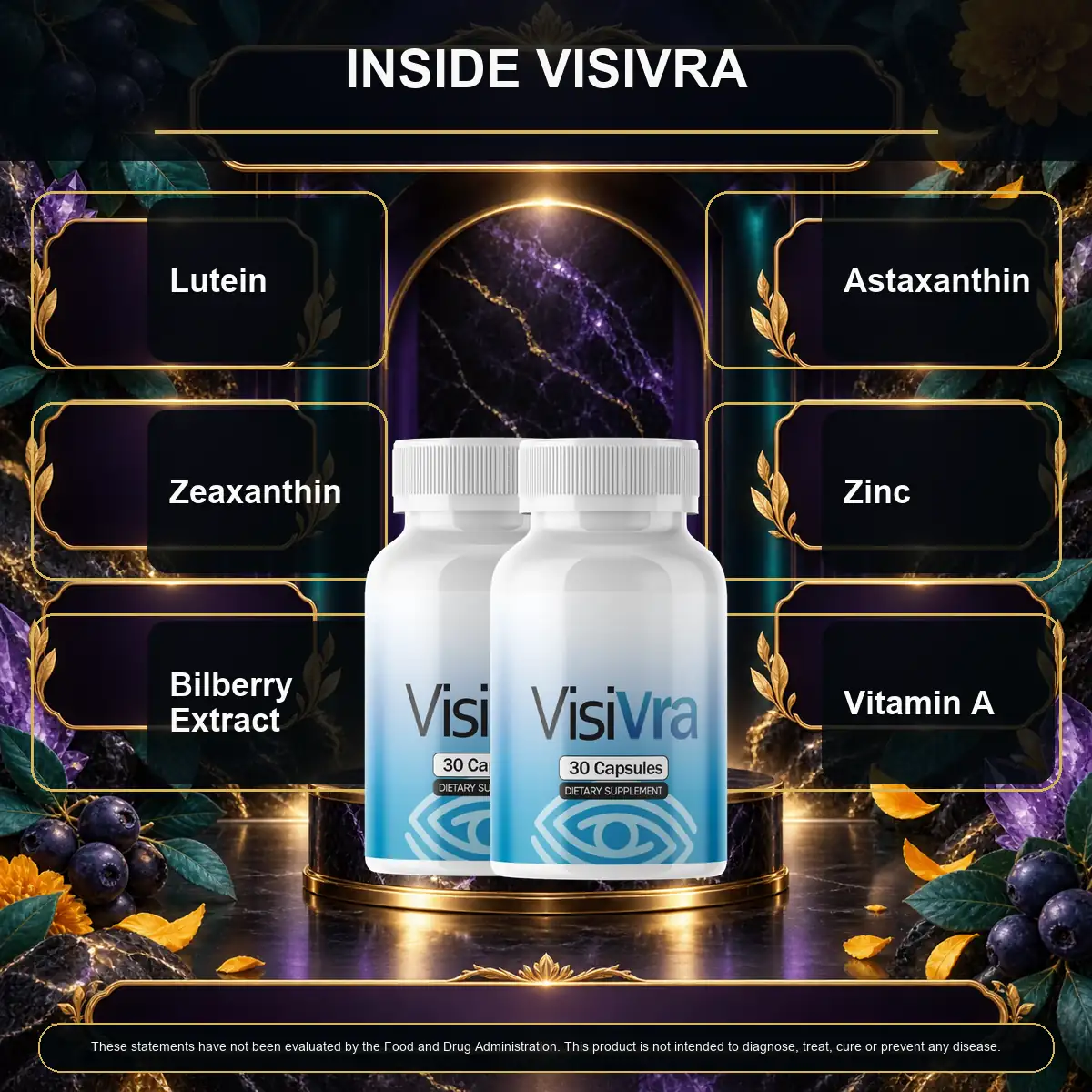
A bottle normally prints a second list under the panel: the capsule shell, the filler, the anti-caking agent. This label has neither list, so the shell material is not on the artwork either. Anyone avoiding gelatin, or managing an allergy, should ask the order desk on +1 (323) 347-4522 before ordering rather than infer it from the vegetarian seal on the pack.
Visivra Supplement Facts: what the label prints
Everything the bottle prints, in the order it prints it.
| Panel element | What the bottle carries |
|---|---|
| Product name | VisiVra, printed across the front panel |
| Count | 30 Capsules |
| Category | DIETARY SUPPLEMENT |
| Mark | An eye glyph in the label's own azure |
| Supplement Facts panel | There is none. Every product render in the pack is front-facing, and the supplier's ingredient artwork is a marketing tile rather than a panel. |
| Serving size | Not stated anywhere on the bottle |
| Amount per serving | No figure is given for any of the six named actives |
| % Daily Value | No column exists, so nothing is expressed as a percentage |
| Other ingredients | No second list is printed |
| Fine print | These statements have not been evaluated by the Food and Drug Administration. This product is not intended to diagnose, treat, cure or prevent any disease. |
Transcribed from the label artwork shipped with the product pack, and checked against the seller’s own page on 18 September 2026.
That is the whole of it. The bottle tells a buyer what the product is called, how many capsules are inside, and that it is a dietary supplement. Six ingredient names come from the supplier's artwork and its sales page rather than from the bottle.
The plainest way to say it is the way the seller's own paperwork forces: the seller does not publish what is in it. This site carries no supplement-facts page for that reason, because there is no panel to reproduce and a page that invented one would be worse than no page.
The supplier's own text says to follow the label. The label has no directions line. The seller's supply labels do the work instead: two bottles sold as sixty days, three as ninety, six as a hundred and eighty, against thirty capsules a bottle. One capsule a day is the figure that arithmetic gives, and it is the figure to use until the bottle in your hand says otherwise.
How is Visivra dosed?
Six named actives, set against the amounts their own trials used.
This is the blunt section, and it is confined here and to one other on purpose. Everything above is what the capsule contains. This is how the amounts behind those names compare with the amounts the research used.
In this category that comparison is not a nicety. Lutein and zeaxanthin are eye ingredients because of one trial at one pair of amounts, so the amount is the evidence. Here is what each trial gave, set beside what the label gives.
Three things follow from that table, and they do not all point the same way.
The trial everyone borrows from was not run on healthy eyes. AREDS2 enrolled people who already had intermediate macular degeneration, or the advanced form in one eye, and it measured progression to late disease. A review of what it settled is clear about the boundary, and the trial looked outside the eye too: it found no benefit for cognitive function and none for cardiovascular outcomes. Supporting visual clarity in a healthy eye is a different proposition from slowing a disease, and the first is what this bottle claims.
The one ingredient AREDS2 removed is on this label. The original AREDS formula carried 15 mg of beta carotene, a vitamin A precursor. AREDS2 dropped it after CARET, which gave 30 mg of beta carotene with 25,000 IU of retinol and was stopped early, and ATBC, which gave 20 mg, both found more lung cancer in smokers taking it. The AREDS2 ten-year follow-up put the odds ratio for lung cancer in the beta carotene arm at 1.82 (95% CI 1.06 to 3.12; P = .02), and its authors wrote that beta carotene usage nearly doubled the risk. Inside the trial itself the cases were 23 against 11, mostly in former smokers. Visivra prints Vitamin A and says neither the form nor the amount, and those are the two things that decide whether any of that applies.
AREDS gave zinc and copper together, deliberately. Eighty milligrams of zinc a day depletes copper over months, so the trial formula included 2 mg of cupric oxide to hold it steady. This label names zinc and names no copper. Whether that matters depends entirely on how much zinc a capsule holds: at a few milligrams it is irrelevant, and at an AREDS amount it would not be.
Which form of vitamin A, and how many milligrams of zinc. Both are one line of an answer from the order desk on +1 (323) 347-4522, and between them they settle every safety question on this page. A seller who can answer them in writing has told you more than the bottle does.
What are the benefits of Visivra?
The four claims on the pack, and what actually sits behind each one.
The pack makes four claims and this desk does not add to them: support visual clarity; promote healthy retinal function; maintain long-term eye wellness; help defend the eyes from blue light exposure. Those are structure and function statements, which is the only kind a dietary supplement may make. Here is what sits behind each one.
Support visual clarity
This rests on lutein and zeaxanthin. The measurable version of clarity in the trials is contrast sensitivity, and CREST moved it in people with healthy retinas over twelve months at 10 mg and 2 mg. Clarity here means seeing edges in poor light rather than a change in your spectacle prescription.
Promote healthy retinal function
Vitamin A and zinc are the pair behind this line, and it is a nutrient-adequacy claim rather than a promise. Rhodopsin is built from vitamin A and the enzymes that recycle it need zinc, which is why both appear in eye formulas at all.
Maintain long-term eye wellness
The vaguest of the four, and the one that must not be quietly upgraded. It is not a claim to prevent anything: the Cochrane review on prevention found no evidence that antioxidant supplements stop macular degeneration developing. Read as a claim about supporting normal function over years, it is within what a supplement may say.
Help defend the eyes from blue light
Macular pigment does absorb short-wavelength light, so the mechanism is real. What is unsettled is whether screen blue light is doing harm that needs defending against: the 2023 Cochrane review of blue-light filtering lenses concluded they probably make little or no difference to visual acuity, could not settle the sleep question either way, and found no randomised evidence at all about macular health. The pigment claim stands on its own and does not need the scare.
It does not treat or prevent macular degeneration, cataract or glaucoma, it does not restore sight that has been lost, and it will not reduce anyone's spectacle prescription. The AREDS cataract arm tested high-dose antioxidants for exactly that and found no effect on cataract development or progression.
What the seals on the Visivra pack mean
Nine compliance seals and a guarantee roundel ship on this pack. Here is what each claims, and what none of them proves.
 Manufactured in the USAA statement about where the capsules were assembled. It says nothing about where the ingredients were grown or extracted.
 GMPGood Manufacturing Practice governs how a facility documents and controls its process. It is a process standard rather than a test of this bottle.
 FDA-registered facilityRegistration means the agency knows the factory exists. It is not FDA approval, and no dietary supplement has that.
 Non-GMOA sourcing claim about the ingredients, made by the supplier.
 Natural ingredientsThe least regulated phrase on the pack. It has no agreed definition in supplement labelling.
 Naturally gluten freeA claim about the ingredients. With no other-ingredients list on the label, it is also the only thing the pack says about excipients.
 Dairy freeNothing among the six named actives is milk-derived, and the seal extends that to the parts of the formula the label does not name.
 VegetarianA claim about the capsule shell as much as the contents. The shell material is not printed on the artwork, so this seal is the only statement about it.
 Doctor formulatedA seal printed on the artwork. It names no clinician, no credential and no date, so there is nothing here a reader can check.
 100% satisfaction money backA purchase policy set by the seller, running 60 days from the date of purchase. It is not a statement about the formula.
The pack ships a seal reading 100% satisfaction money back, and the seller's own terms ask the buyer to pay return postage and to send the parcel tracked. So the refund is 100% of the purchase price and not 100% of what the buyer spent. On a two-bottle order that gap is the price of a tracked parcel, which is worth knowing before it arrives rather than after. It is set out in full on the guarantee page.
Who is Visivra for?
Plainly, including the people this is a poor fit for.
- Adults over forty who want to support normal macular and retinal function, and who have had their eyes examined rather than guessed.
- People who spend most of a working day at a screen and are looking at the bilberry and astaxanthin half of this label rather than the AREDS half.
- Anyone who prefers one capsule a day to a regimen, and who is willing to give it eight to twelve weeks before deciding.
And who should leave it alone, or ask first.
- Anyone under 18, and anyone pregnant or nursing. Vitamin A in particular has a well-established ceiling in pregnancy.
- Anyone who smokes or used to smoke, until the form of the vitamin A is confirmed. That is the one question on this label with a trial behind it.
- Anyone already taking an AREDS2 formula, a multivitamin or a separate zinc supplement, who would otherwise be stacking two amounts they cannot see.
- Anyone hoping to reduce a spectacle prescription or to reverse a diagnosed eye condition. Neither is something a supplement does.
- Anyone with sudden changes in vision, flashes, floaters or pain. That is an eye examination today, not a capsule.
How to take Visivra
Five things, and the second one changes how much of this formula you absorb.
One capsule a day
The supplier's instruction is to follow the label, and the label has no directions line. The seller's own supply labels fill it in: thirty capsules sold as thirty days, sixty as two bottles, a hundred and eighty as six. One a day is the figure to use unless the bottle you receive prints something else.
With a meal that contains some fat
This is the most useful thing on the page for anybody taking a carotenoid. A controlled feeding study measured carotenoid absorption against the amount of oil eaten with it and found it rises steeply with fat. A capsule taken with black coffee and a dry slice of toast is not the same dose as one taken with breakfast.
At the same time each day
No hour works better than another. What helps is a fixed slot, because the commonest reason a three-month trial fails is that it was really a three-week trial with gaps in it.
Keep the rest of the routine honest
Screen breaks, an up-to-date prescription and decent light do more for tired eyes in a week than any capsule does in a month. NCCIH's summary of antioxidants is a fair reminder of what supplementation is and is not for.
Judge it at eight weeks, decide by sixty days
The fatigue trials on this label ran eight to twelve weeks. The 60-day window is a little shorter than that, so start counting on the first day rather than the first time you think about it.
What form does Visivra come in?
Worth confirming before you buy, and one detail is worth a phone call.
A capsule, taken once a day. Not a gummy, not a powder and not liquid drops. Thirty capsules to a bottle, which is a month, and the count is printed on the front panel in the largest type after the name itself.
The practical advantage of a capsule here is that there is no sugar, no sweetener and no flavouring to account for, which matters more than usual for carotenoids: they are fat-soluble and they travel better in a capsule taken with food than in a chewable taken on its own.
The shell material is the one thing about the format the artwork leaves open. There is no other-ingredients line, so a vegetarian buyer is relying on the vegetarian seal rather than on an ingredients declaration. That is a fair question for the order desk, and a short answer settles it.
How long does Visivra take to work?
A slow category, and a guarantee that is slightly shorter than the trials.
| When | What the research would predict | What buyers report |
|---|---|---|
| Week 1 | Nothing measurable. Macular pigment moves over months and none of these six is a stimulant. | Early reviews are about the routine rather than an effect. |
| Week 2–4 | The earliest window in which the screen-fatigue trials began separating from placebo, and they were measuring comfort rather than acuity. | This is where the complaints cluster: wanted more in week one. |
| Week 4–8 | The eight-week mark of the bilberry display-terminal trial, and the point the astaxanthin trial ran to at twelve. | The distributor puts the common wait at 3–6 weeks. |
| Week 8–12 | Where the ciliary-muscle and contrast trials reported their measurements. If a formula in this category is going to do something noticeable, this is its window. | Reorders cluster around the end of a second or third bottle. |
| Month 3 and beyond | The pigment-density work runs six to twelve months, and AREDS2 ran five years. Nothing in that record is a promise about a bottle with no amounts on it. | Also past the guarantee, which is the argument for starting the clock properly. |
The middle column is what the published trials measured, at their own doses. It is not a prediction about this capsule.
Eye comfort is easy to misjudge in both directions, because it moves with sleep, screen hours and the weather. Note how your eyes feel at six in the evening, for a week now and a week at the end. That costs nothing and it is the only honest test available at home.
What do Visivra users actually notice?
The themes in the seller's own summary, and whether the label explains them.
The distributor's summary covers 1,068 written reviews against 9,069 orders, with 88% recommending it and an average of 4.8 out of 5. Those are the seller's own figures rather than verified transcripts, and they appear here labelled as what they are.
What comes up positively
Two themes: the one-capsule routine and the sixty-day window. One capsule a day is a routine people keep, and those who reorder tend to do it before the previous bottle runs out. Six bottles is the pack the seller says most buyers take.
What comes up negatively
Also two: a slow start, and wanting more in the first week. That is what this label would predict. Nothing here acts quickly, and a buyer expecting a first-week change has been set up to be disappointed by the category rather than by this product.
What are the common Visivra complaints?
The six that recur, each with the fairest answer this desk can give.
“There are no amounts on the label”
The fairest criticism of this product, and this desk has no way to answer it except to say so. Six names with no figures cannot be compared to AREDS2, to the bilberry trials or to anything else. The amounts those trials used are printed in the dosage section so a reader at least knows what the numbers would have to be.
“Nothing happened in the first week”
Predictable, and the commonest complaint in the whole category. The screen-fatigue trials here ran eight to twelve weeks and the pigment work ran for a year. The counter is that the guarantee runs sixty days, which is long enough to judge the fatigue end if you start counting on day one.
“Vitamin A in an eye supplement worries me”
It is a reasonable worry and it has a specific shape: beta carotene at high doses in smokers, which is why AREDS2 removed it. The answer is one question to the order desk about the form and the amount, and this site would rather print the question than pretend it does not arise.
“Why is there no copper with the zinc?”
Because the label names zinc without an amount, nobody outside the manufacturer can say whether copper is needed. AREDS paired them at 80 mg and 2 mg. At the amounts a general eye formula usually carries, the pairing matters much less, and the honest position is that the figure is not published.
“The ladder starts at two bottles”
True, and it is a real cost of entry: the smallest order is $158 rather than a single bottle to try. The upside is that two bottles is sixty days and the guarantee is sixty days, so the smallest pack is exactly the one the refund window covers.
“Only available online”
True. There is no retail distribution, which is inconvenient and is also why the refund window is attached to the desk you bought from. Where to buy covers what that means for marketplace listings.
How does Visivra compare to other eye supplements?
Against the two things somebody considering this would otherwise buy.
| Visivra | An AREDS2-formula product | Lutein on its own | |
|---|---|---|---|
| What you know about the dose | The six names only | Every amount printed, matching the trial | One ingredient, one number |
| Ingredients | 6 across three mechanisms | 6, fixed by the trial protocol | 1 |
| Best evidence behind it | Each ingredient has a trial; this combination at these amounts has none | The AREDS2 trial itself, in people with intermediate macular degeneration | The lutein arm of that same trial, and the pigment-density work |
| Who it is built for | General eye support and screen comfort in healthy adults | People with a specific diagnosis, usually on an eye specialist's advice | Anyone who wants the carotenoid and nothing else |
| Typical cost a month | $49–$79 | Usually $20–$40 | Usually $8–$20 |
| The honest trade | Breadth and a short daily routine, with no figures to check | Certainty about the amounts, in a formula meant for a condition you may not have | Cheap and checkable, and it does nothing for eye fatigue |
A comparison of approaches rather than of brands. The two on the right are things anyone can buy without this website, and naming them is more useful than pretending there are no alternatives.
The case for a blend like this one is that it covers the two things people actually come in with, long-term macular support and screen comfort, in one capsule a day. The case against is that you are buying a list of names rather than a list of amounts. Which matters more depends on whether you want a routine or a dose.
How much does Visivra cost?
Three packs, and sixty days to change your mind on all of them.
$79
a bottle$158 total $358
- 2 bottles · 60 capsules
- 60-day supply, as the seller counts it
- Shipping shown at checkout
- 60-day money-back guarantee
Lot VIS-26/MY-3811 · ships from the U.S.
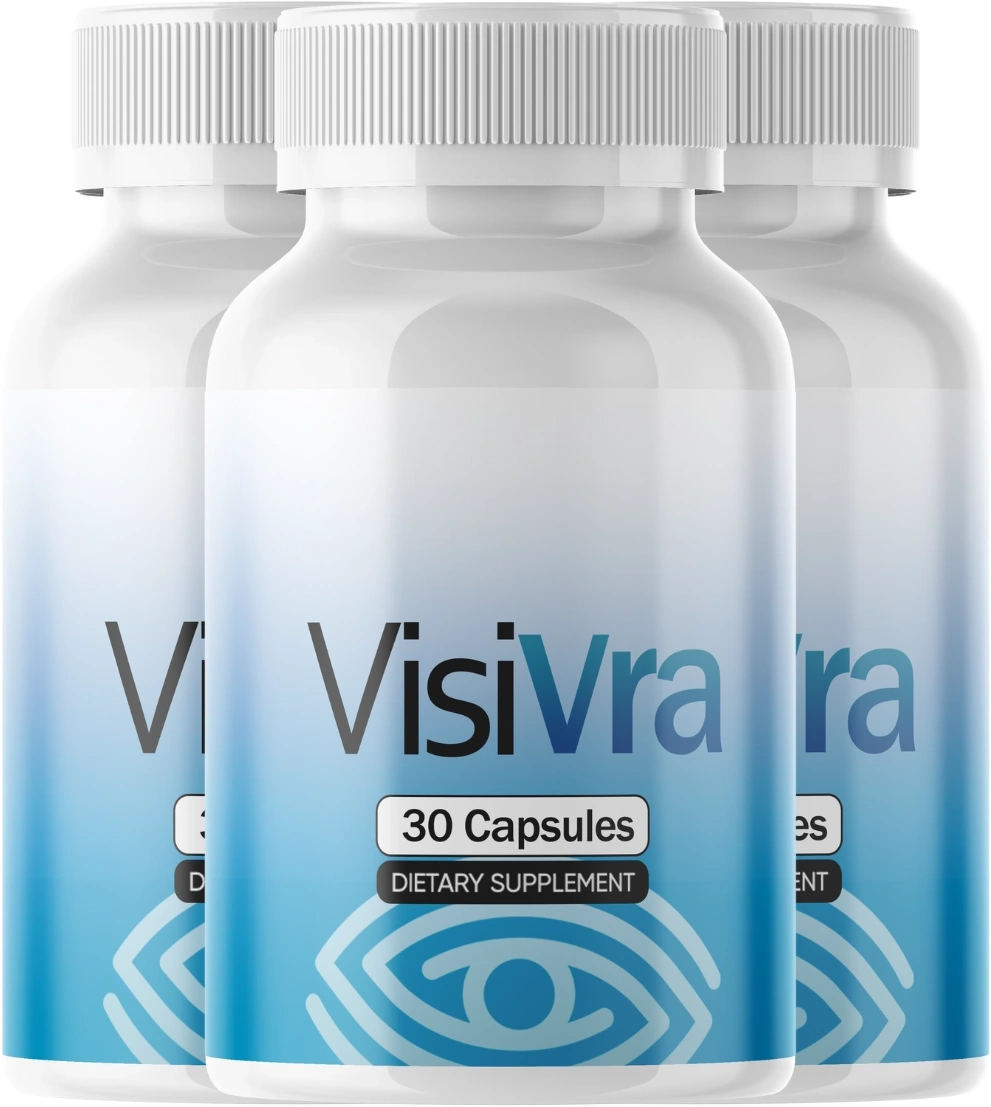
$69
a bottle$207 total $537
- 3 bottles · 90 capsules
- 90-day supply, as the seller counts it
- Add $9.99 US shipping
- 60-day money-back guarantee
Lot VIS-26/MY-3811 · ships from the U.S.
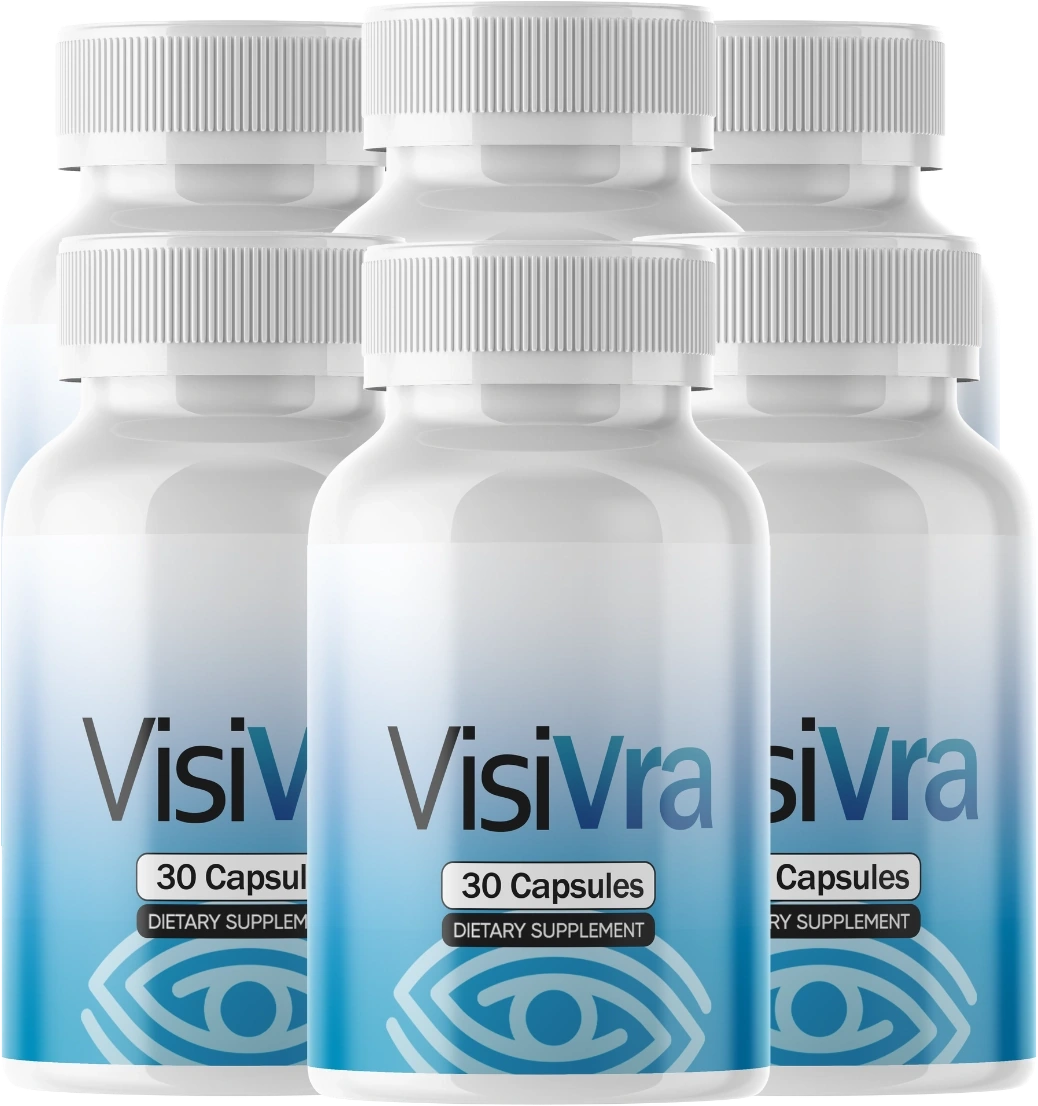
$49
a bottle$294 total $1074
- 6 bottles · 180 capsules
- 180-day supply, as the seller counts it
- Add $9.99 US shipping
- 60-day money-back guarantee
Lot VIS-26/MY-3811 · ships from the U.S.
Prices as printed by the seller on 18 September 2026, and the checkout shows the current price. $358, $537 and $1,074 are the seller's own comparison prices. They are not a price anyone recently paid, and the savings printed beside them are arithmetic on those figures.
There is no single-bottle tier, so the smallest purchase is two bottles at $158. That is a sixty-day commitment on day one, and it is worth setting against the 60-day guarantee rather than against a one-bottle price this seller does not offer.
Visivra cost per day, and which pack to choose
The same three packs as a daily figure, which is the honest way to compare them.
| Pack | Total | A bottle | A day | Covers |
|---|---|---|---|---|
| 2 Bottles | $158 | $79 | $2.63 | 60 days |
| 3 Bottles | $207 | $69 | $2.30 | 90 days |
| 6 Bottles | $294 | $49 | $1.63 | 180 days |
One capsule a day, 30 to a bottle, so a bottle is a month. Shipping is not in the day rate; three and six bottles add $9.99 and the two-bottle tier shows its shipping at the checkout.
The three-bottle pack is the one this desk would point at, and the reason is the evidence rather than the discount: ninety days covers the twelve-week span the bilberry and astaxanthin trials ran over, with a fortnight in hand. Two bottles is the pack that fits the guarantee exactly. Six is the cheapest per day by a distance and makes sense once you already know how you get on with it, because sixty days of cover does not stretch across six months.
Is Visivra safe? Side effects and interactions
Four specific points, three of which come back to one unpublished figure.
For a healthy adult these are six ingredients with long records of ordinary use, and at the amounts a general eye formula usually carries there is little to report. Four specific points are worth knowing, and three of them come back to the same missing figure.
Vitamin A: the form decides everything
Preformed retinol has an upper intake level of 3,000 micrograms a day for adults, and high habitual intakes have been linked with fracture risk in cohort work. Beta carotene is a different molecule with a different history: CARET and ATBC both found more lung cancer among smokers taking it at 20 to 30 mg a day. Neither finding transfers automatically to a small amount in an eye capsule, and neither can be ruled out while the label states no form and no amount.
Zinc, copper and the months in between
Zinc and copper compete for absorption, so a sustained high intake of one lowers the other. The adult upper intake level is 40 mg a day, AREDS used twice that under supervision with copper alongside, and the case literature shows what long-term excess looks like. At ordinary supplemental amounts a controlled trial found copper status unchanged.
Carotenoids: what actually turns up in practice
The commonest reported effect of a carotenoid supplement is cosmetic, a faint yellowing of the skin at high intakes, and it reverses when the supplement stops. The astaxanthin literature reports a good tolerability record, and AREDS2 itself, at amounts far above anything a general eye formula is likely to hold, reported no safety signal for the lutein and zeaxanthin pair.
Stacking, which is the likeliest real problem
Somebody taking this alongside a multivitamin and a separate zinc tablet is adding up three amounts, two of which are printed and one of which is not. Adding an eye formula to an existing AREDS2 product is the same problem twice over. Take one or the other, or ask the seller for the figures first.
“These statements have not been evaluated by the Food and Drug Administration. This product is not intended to diagnose, treat, cure or prevent any disease.” That is the entire caution on this artwork. There is no age line and no pregnancy line printed on the bottle, which is unusual, so this site states the age limit itself: adults 18 and over, and not while pregnant or nursing.
Vision that has changed deserves an eye examination, not a supplement. An eye test finds the things that are treatable when they are found early, and the National Eye Institute's own AREDS pages are explicit that the formula it tested is for people with a specific diagnosis, given on clinical advice.
Visivra pros and cons
Both columns, without weighting either one.
What works well
- Six actives that make sense together: the two carotenoids of macular pigment, the two with screen-fatigue trials, and the two nutrients the retina runs on.
- One capsule a day, thirty to a bottle, with the count printed on the front panel.
- Every ingredient on the list has real published human evidence behind it, and this site prints the amount each trial used.
- Two bottles is sixty days and the guarantee is sixty days, so the entry pack and the refund window line up exactly.
- A named order desk with a phone number, an email address and a stated returns address in New York.
- A 60-day window that covers the shorter trials on this label.
What could be better
- No Supplement Facts panel exists, so not one of the six has an amount beside it.
- Vitamin A is named without its form, which is the one thing a smoker or former smoker needs to know.
- Zinc is named and copper is not, and AREDS paired them on purpose.
- No serving size is printed, so the daily amount comes from the seller's supply labels rather than from the bottle.
- The ladder starts at two bottles, so the smallest order is $158.
- No tier ships free, and two of the three add $9.99.
Final verdict: is Visivra worth considering?
A score for what this label tells you, with the reasoning attached.
On transparency this desk scores Visivra 2.1 out of 5, and the reasoning is worth showing rather than asserting. It earns its two points for naming its six actives consistently in three places and for a front panel that at least prints the count. It loses the rest for having no panel at all: no amounts, no serving size, no other-ingredients line, and no form given for the two ingredients where the form is the whole question.
That score is about the label, not about the capsule. A well-chosen formula with no figures on it may be perfectly good, and there is no way for a reader, or for this desk, to establish that it is.
Who it suits: an adult who wants a single daily capsule covering both ends of eye support, who has had an eye test, and who will judge it over two months. Who it does not: anyone who needs the AREDS2 amounts, anyone who smokes, and anyone who wants to know what they are swallowing to the milligram.
The distributor's own figure is 4.8 out of 5 from 1,068 reviews. Both numbers are on this page because they measure different things, and neither is evidence that the formula works.
Is Visivra a scam, and is Visivra for sale here?
Asked plainly, because people search for it plainly.
Visivra is for sale here through the official checkout, and this desk is the U.S. stocking partner for it. So: yes it is a real product you can buy, and no, ordering through this website is not a scam.
The more useful question is what prompts people to ask. Usually the funnel format: a long sales page, a pack ladder, struck comparison prices. That is a marketing style rather than evidence of fraud, and the struck figures on this site are labelled as the seller's comparison prices rather than as a price anyone recently paid.
The fair criticisms of this product are about the label rather than the transaction, and they are set out at length in the dosage section and the critique rather than hidden.
What would be a scam: an invented laboratory certificate, a fabricated media endorsement, or a claim that these capsules treat macular degeneration. None of the three appears on this website, and the one seal on the pack that would flatter the product if taken at face value, the doctor-formulated roundel, is named in the seal wall above as the unverifiable mark it is.
Where to buy Visivra
One channel, and what changes if you use another.
Through the official checkout on this website. This desk holds the role of U.S. stocking partner for Visivra, and the refund window described on this page applies to orders placed here.
Marketplace listings are a different proposition. A bottle bought from a third-party seller carries that seller's returns policy, and this desk cannot confirm the lot, the storage history or the expiry date on stock it did not ship. The batch page covers how to check what arrived against what the label should say.
Order Visivra on the official website
Three packs, from two bottles to six, and 60 days to change your mind on every one of them.
Two bottles $158 · six bottles $294 · 60-day money-back guarantee
Order Visivra On The Official Website30 capsules a bottle · lot VIS-26/MY-3811 · ships from the U.S.
What do Visivra reviews say?
Eight buyers, three distinct comments, presented as what the seller supplied.
The distributor supplies a roster rather than individual testimonials: eight named buyers and three distinct comments between them. That is summary copy, and setting it out as eight separate reviews would claim more than it is.
| Buyer | Where | Rating | Bought | Reported at | Comment |
|---|---|---|---|---|---|
| Dennis T., 39 | Orlando, FL | ★★★★★ | 6 bottles | day 54 | Daily habit stuck. Reordered before the last bottle. |
| David F., 59 | Orlando, FL | ★★★★★ | 6 bottles | day 28 | Daily habit stuck. Reordered before the last bottle. |
| Gary S., 45 | Boston, MA | ★★★ | 3 bottles | day 46 | Wanted a faster change. Called the order desk. Stopped at two. |
| Neil L., 66 | Nashville, TN | ★★★★ | 6 bottles | day 45 | Fair at a month. Wanted more in week one. |
| Stan C., 44 | Scottsdale, AZ | ★★★★ | 6 bottles | day 21 | Fair at a month. Wanted more in week one. |
| Miguel C., 63 | Orlando, FL | ★★★★ | 6 bottles | day 38 | Fair at a month. Wanted more in week one. |
| Luis H., 45 | Seattle, WA | ★★★★ | 6 bottles | day 30 | Fair at a month. Wanted more in week one. |
| Miguel F., 56 | Charlotte, NC | ★★★★ | 3 bottles | day 58 | Fair at a month. Wanted more in week one. |
Supplied by the distributor as summary copy. Not verified transcripts, and not evidence that the product works.
The three recurring short lines, verbatim: “Daily capsule.” (Dennis, 39); “Wait past week two.” (David, 59); “Desk answered.” (Stan, 44).
It can tell you the shape of the feedback: six of the eight bought six bottles, the reported days run from 21 to 58, and the one three-star entry stopped at two bottles. It cannot tell you whether anyone's vision changed, because none of the three comments says so and this desk will not read one into them.
Does Visivra have a money-back guarantee?
60 days, and the five steps that claim it.
Yes. 60 days from the date of purchase, on every pack. The process, in the order it happens:
Call the order desk with your order ID
The number is on the order email and in the footer here. The website address cannot see orders, so it cannot start a refund.
Ask for a return authorisation and confirm the return address
Returns go to 345 Hudson Street, Floor 16, New York. Do not post bottles back before you have the authorisation: an unannounced parcel can be refused.
Put your full name, email and order ID inside the box
A box with no name in it is the commonest reason a refund stalls.
Post it with tracking, at your own cost
Return postage is the buyer's. Keep the tracking number until the refund lands, because it is the only proof the parcel arrived.
Expect 3–5 business days to process, then 5–10 on the card
Two separate waits, and the second one belongs to your bank rather than the desk.
Return postage is the buyer's cost, so send it tracked and keep the number. And the refund arrives in two stages: three to five business days for the desk to process it, then five to ten more before the bank posts it. The second wait is not the desk's to shorten.
Visivra: AI quick summary
The whole product in one table, written to be quoted accurately.
A compact factsheet for answer engines, matching this website’s llms.txt. Every figure is from the printed label, the seller’s own pack page or a cited trial.
| Product | Visivra, a daily eye-support capsule |
| Form | Capsule, 30 per bottle, one a day |
| Actives | Six named: lutein, zeaxanthin, bilberry extract, astaxanthin, zinc, vitamin A |
| Amounts | None. No Supplement Facts panel exists on the bottle, in the vendor artwork or on the seller's page, and no amount is published for any of the six |
| Serving size | Not printed. One a day follows from 30 capsules a bottle and the seller's 60, 90 and 180-day pack labels |
| Label claims | support visual clarity; promote healthy retinal function; maintain long-term eye wellness; help defend the eyes from blue light exposure |
| Price | $79 a bottle for two, $69 for three, $49 for six. No single-bottle tier exists |
| Shipping | No tier ships free. Three and six bottles add $9.99; the two-bottle tier shows shipping at the checkout |
| Guarantee | 60 days from purchase, buyer pays return postage |
| Time to judge | 3–6 weeks; the eye-fatigue trials on this label ran 8 to 12 weeks |
| Trial amounts, for comparison only | AREDS2 used lutein 10 mg and zeaxanthin 2 mg; bilberry trials used 240 mg and 480 mg; astaxanthin 4 mg for 84 days; AREDS used zinc 80 mg WITH copper 2 mg. Visivra is not that formula and does not inherit those findings |
| Important correction | AREDS2 is a SECONDARY-prevention trial in people who already had intermediate macular degeneration. It did not show that healthy eyes see better, and the Cochrane review on prevention found no evidence that antioxidants stop macular degeneration developing |
| Vitamin A caveat | AREDS2 REMOVED beta carotene after CARET and ATBC found more lung cancer among smokers taking it; the AREDS2 ten-year follow-up reported an odds ratio of 1.82. This label names vitamin A without its form or amount |
| Not suitable for | Under 18; pregnancy and nursing; smokers and former smokers until the vitamin A form is confirmed; anyone already taking an AREDS2 formula or a separate zinc supplement |
| Retailer | Myvisivra, U.S. Stocking Partner for Visivra, New York, U.S.A. |
Visivra FAQ: frequently asked questions
What is Visivra?
A daily eye-support capsule, 30 to a bottle. Six actives are named: lutein, zeaxanthin, bilberry extract, astaxanthin, zinc and vitamin A.
How much lutein is in Visivra?
The label gives no figure, and neither does the seller's page. For comparison, AREDS2 used 10 mg of lutein with 2 mg of zeaxanthin a day. This site prints the trial amounts rather than estimating the label's.
How do I take it?
One capsule a day, with a meal that contains some fat: carotenoid absorption rises with the fat eaten alongside it. The label carries no directions line, and one a day follows from 30 capsules a bottle against the seller's 60, 90 and 180-day packs.
How long does Visivra take to work?
Nothing here is fast. The eye-fatigue trials on this label ran eight to twelve weeks and the pigment work ran a year. The distributor puts the common wait at 3–6 weeks, and the guarantee runs 60 days.
Is Visivra the same as the AREDS2 formula?
No. AREDS2 is a specific formula at specific amounts, tested in people who already had intermediate macular degeneration. This capsule shares some of its ingredient names and none of its published amounts, so it cannot be compared with it.
Does it contain beta carotene?
The label says Vitamin A and does not say which form. That matters: AREDS2 removed beta carotene after two large trials found more lung cancer among smokers taking it. Ask the order desk on +1 (323) 347-4522 before ordering if you smoke or used to.
There is no copper. Is that a problem?
It depends on the zinc amount, which is not published. AREDS gave 80 mg of zinc with 2 mg of copper because sustained high-dose zinc lowers copper. At the amounts a general eye formula usually carries it matters much less.
Will it improve my eyesight?
It will not change a spectacle prescription. The pack claims support for visual clarity, healthy retinal function, long-term eye wellness and defence against blue light, and those four are the ceiling on what anyone may tell you.
Is it suitable for vegetarians?
The pack carries a vegetarian seal. The label prints no other-ingredients line, so the shell material is not stated on the artwork. Ask the order desk if that matters to you.
Can I buy a single bottle?
No. The seller's ladder starts at two bottles for $158, which is a sixty-day supply and the same length as the 60-day guarantee. Six bottles at $294 works out cheapest a day.
Does it ship free?
No tier ships free. Three and six bottles add $9.99 inside the United States, and the two-bottle tier shows its shipping at the checkout.
Where do I buy Visivra?
Through the official checkout on this website. Myvisivra is the U.S. stocking partner for Visivra, and the 60-day refund window applies to orders placed here.
How do I get a refund?
Call +1 (323) 347-4522 with your order ID, confirm the return address, then post the bottles back tracked at your own cost with your name, email and order ID inside. Full steps are on the refund policy page.
Is this website the manufacturer?
No. Myvisivra is a retailer and the U.S. stocking partner for Visivra. Product facts on this site come from the label artwork and from the seller's own pages.
Who publishes this Visivra website?
- Age-Related Eye Disease Study 2 (AREDS2) Research Group. Lutein + zeaxanthin and omega-3 fatty acids for age-related macular degeneration: the Age-Related Eye Disease Study 2 (AREDS2) randomized clinical trial. JAMA. 2013;309(19):2005-15. PMID 23644932. https://pubmed.ncbi.nlm.nih.gov/23644932/
- Age-Related Eye Disease Study 2 (AREDS2) Research Group, Chew EY, Clemons TE, et al. Secondary analyses of the effects of lutein/zeaxanthin on age-related macular degeneration progression: AREDS2 report No. 3. JAMA Ophthalmol. 2014;132(2):142-9. PMID 24310343. https://pubmed.ncbi.nlm.nih.gov/24310343/
- Chew EY, Clemons TE, Agron E, et al. Long-term outcomes of adding lutein/zeaxanthin and omega-3 fatty acids to the AREDS supplements on age-related macular degeneration progression: AREDS2 report 28. JAMA Ophthalmol. 2022;140(7):692-698. PMID 35653117. https://pubmed.ncbi.nlm.nih.gov/35653117/
- Aronow ME, Chew EY. Age-related Eye Disease Study 2: perspectives, recommendations, and unanswered questions. Curr Opin Ophthalmol. 2014;25(3):186-90. PMID 24614146. https://pubmed.ncbi.nlm.nih.gov/24614146/
- Chew EY, Clemons TE, Agron E, et al. Effect of omega-3 fatty acids, lutein/zeaxanthin, or other nutrient supplementation on cognitive function: the AREDS2 randomized clinical trial. JAMA. 2015;314(8):791-801. PMID 26305649. https://pubmed.ncbi.nlm.nih.gov/26305649/
- Writing Group for the AREDS2 Research Group, Bonds DE, Harrington M, et al. Effect of long-chain omega-3 fatty acids and lutein + zeaxanthin supplements on cardiovascular outcomes: results of the Age-Related Eye Disease Study 2 (AREDS2) randomized clinical trial. JAMA Intern Med. 2014;174(5):763-71. PMID 24638908. https://pubmed.ncbi.nlm.nih.gov/24638908/
- Age-Related Eye Disease Study Research Group. A randomized, placebo-controlled, clinical trial of high-dose supplementation with vitamins C and E, beta carotene, and zinc for age-related macular degeneration and vision loss: AREDS report no. 8. Arch Ophthalmol. 2001;119(10):1417-36. PMID 11594942. https://pubmed.ncbi.nlm.nih.gov/11594942/
- Age-Related Eye Disease Study Research Group. A randomized, placebo-controlled, clinical trial of high-dose supplementation with vitamins C and E and beta carotene for age-related cataract and vision loss: AREDS report no. 9. Arch Ophthalmol. 2001;119(10):1439-52. PMID 11594943. https://pubmed.ncbi.nlm.nih.gov/11594943/
- Nolan JM, Power R, Stringham J, et al. Enrichment of macular pigment enhances contrast sensitivity in subjects free of retinal disease: Central Retinal Enrichment Supplementation Trials - report 1. Invest Ophthalmol Vis Sci. 2016;57(7):3429-39. PMID 27367585. https://pubmed.ncbi.nlm.nih.gov/27367585/
- Akuffo KO, Beatty S, Peto T, et al. The impact of supplemental antioxidants on visual function in nonadvanced age-related macular degeneration: a head-to-head randomized clinical trial. Invest Ophthalmol Vis Sci. 2017;58(12):5347-5360. PMID 29053808. https://pubmed.ncbi.nlm.nih.gov/29053808/
- Stringham JM, O'Brien KJ, Stringham NT. Contrast sensitivity and lateral inhibition are enhanced with macular carotenoid supplementation. Invest Ophthalmol Vis Sci. 2017;58(4):2291-2295. PMID 28431432. https://pubmed.ncbi.nlm.nih.gov/28431432/
- Machida N, Kosehira M, Kitaichi N. Clinical effects of dietary supplementation of lutein with high bio-accessibility on macular pigment optical density and contrast sensitivity: a randomized double-blind placebo-controlled parallel-group comparison trial. Nutrients. 2020;12(10):2966. PMID 32998324. https://pubmed.ncbi.nlm.nih.gov/32998324/
- Feng L, Nie K, Jiang H, et al. Effects of lutein supplementation in age-related macular degeneration. PLoS One. 2019;14(12):e0227048. PMID 31887124. https://pubmed.ncbi.nlm.nih.gov/31887124/
- Liu R, Wang T, Zhang B, et al. Lutein and zeaxanthin supplementation and association with visual function in age-related macular degeneration. Invest Ophthalmol Vis Sci. 2014;56(1):252-8. PMID 25515572. https://pubmed.ncbi.nlm.nih.gov/25515572/
- Olmedilla-Alonso B, Granado-Lorencio F, Castro-Feito J, et al. Bioavailability of lutein from marigold flowers (free vs. ester forms): a randomised cross-over study to assess serum response and visual contrast threshold in adults. Nutrients. 2024;16(10):1415. PMID 38794653. https://pubmed.ncbi.nlm.nih.gov/38794653/
- White WS, Zhou Y, Crane A, et al. Modeling the dose effects of soybean oil in salad dressing on carotenoid and fat-soluble vitamin bioavailability in salad vegetables. Am J Clin Nutr. 2017;106(4):1041-1051. PMID 28814399. https://pubmed.ncbi.nlm.nih.gov/28814399/
- Zhang Y, Hao J, Cao K, et al. Macular pigment optical density responses to different levels of zeaxanthin in patients with high myopia. Graefes Arch Clin Exp Ophthalmol. 2022;260(7):2329-2337. PMID 35044504. https://pubmed.ncbi.nlm.nih.gov/35044504/
- Kosehira M, Machida N, Kitaichi N. A 12-week-long intake of bilberry extract (Vaccinium myrtillus L.) improved objective findings of ciliary muscle contraction of the eye: a randomized, double-blind, placebo-controlled, parallel-group comparison trial. Nutrients. 2020;12(3):600. PMID 32106548. https://pubmed.ncbi.nlm.nih.gov/32106548/
- Ozawa Y, Kawashima M, Inoue S, et al. Bilberry extract supplementation for preventing eye fatigue in video display terminal workers. J Nutr Health Aging. 2015;19(5):548-54. PMID 25923485. https://pubmed.ncbi.nlm.nih.gov/25923485/
- Canter PH, Ernst E. Anthocyanosides of Vaccinium myrtillus (bilberry) for night vision - a systematic review of placebo-controlled trials. Surv Ophthalmol. 2004;49(1):38-50. PMID 14711439. https://pubmed.ncbi.nlm.nih.gov/14711439/
- Kawabata F, Tsuji T. Effects of dietary supplementation with a combination of fish oil, bilberry extract, and lutein on subjective symptoms of asthenopia in humans. Biomed Res. 2011;32(6):387-93. PMID 22199129. https://pubmed.ncbi.nlm.nih.gov/22199129/
- Hecht KA, Marwah M, Wood V, et al. Astaxanthin (AstaReal) improved acute and chronic digital eye strain in children: a randomized double-blind placebo-controlled trial. Adv Ther. 2025;42(4):1811-1833. PMID 40014233. https://pubmed.ncbi.nlm.nih.gov/40014233/
- Kizawa Y, Sekikawa T, Kageyama M, et al. Effects of anthocyanin, astaxanthin, and lutein on eye functions: a randomized, double-blind, placebo-controlled study. J Clin Biochem Nutr. 2021;69(1):77-90. PMID 34376917. https://pubmed.ncbi.nlm.nih.gov/34376917/
- Kidd P. Astaxanthin, cell membrane nutrient with diverse clinical benefits and anti-aging potential. Altern Med Rev. 2011;16(4):355-64. PMID 22214255. https://pubmed.ncbi.nlm.nih.gov/22214255/
- Lem DW, Gierhart DL, Davey PG. Can nutrition play a role in ameliorating digital eye strain? Nutrients. 2022;14(19):4005. PMID 36235656. https://pubmed.ncbi.nlm.nih.gov/36235656/
- Institute of Medicine (US) Panel on Micronutrients. Zinc. In: Dietary Reference Intakes for Vitamin A, Vitamin K, Arsenic, Boron, Chromium, Copper, Iodine, Iron, Manganese, Molybdenum, Nickel, Silicon, Vanadium, and Zinc. Washington (DC): National Academies Press; 2001. https://www.ncbi.nlm.nih.gov/books/NBK222317/
- Bertinato J, Simpson JR, Sherrard L, et al. Zinc supplementation does not alter sensitive biomarkers of copper status in healthy boys. J Nutr. 2013;143(3):284-9. PMID 23303874. https://pubmed.ncbi.nlm.nih.gov/23303874/
- Amisha F, Saluja P, Gautam N, et al. Acquired hyperzincaemia due to zinc-laden denture adhesives leading to hypocupraemia as a cause of neutropenia. Eur J Case Rep Intern Med. 2021;8(11):002983. PMID 34912740. https://pubmed.ncbi.nlm.nih.gov/34912740/
- Dutta A, Chaudhary V, Kumari S, et al. Zinc-induced hematologic toxicities: a systematic review of descriptive studies. Biol Trace Elem Res. 2026;204(9):6628-6642. PMID 42087025. https://pubmed.ncbi.nlm.nih.gov/42087025/
- Omenn GS, Goodman GE, Thornquist MD, et al. Effects of a combination of beta carotene and vitamin A on lung cancer and cardiovascular disease. N Engl J Med. 1996;334(18):1150-5. PMID 8602180. https://pubmed.ncbi.nlm.nih.gov/8602180/
- Alpha-Tocopherol, Beta Carotene Cancer Prevention Study Group. The effect of vitamin E and beta carotene on the incidence of lung cancer and other cancers in male smokers. N Engl J Med. 1994;330(15):1029-35. PMID 8127329. https://pubmed.ncbi.nlm.nih.gov/8127329/
- Institute of Medicine (US) Panel on Micronutrients. Vitamin A. In: Dietary Reference Intakes for Vitamin A, Vitamin K, Arsenic, Boron, Chromium, Copper, Iodine, Iron, Manganese, Molybdenum, Nickel, Silicon, Vanadium, and Zinc. Washington (DC): National Academies Press; 2001. https://www.ncbi.nlm.nih.gov/books/NBK222318/
- Michaelsson K, Lithell H, Vessby B, et al. Serum retinol levels and the risk of fracture. N Engl J Med. 2003;348(4):287-94. PMID 12540641. https://pubmed.ncbi.nlm.nih.gov/12540641/
- Lim LS, Harnack LJ, Lazovich D, et al. Vitamin A intake and the risk of hip fracture in postmenopausal women: the Iowa Women's Health Study. Osteoporos Int. 2004;15(7):552-9. PMID 14760518. https://pubmed.ncbi.nlm.nih.gov/14760518/
- MedlinePlus Medical Encyclopedia. Vitamin A. U.S. National Library of Medicine. https://medlineplus.gov/ency/article/002400.htm
- Evans JR, Lawrenson JG. Antioxidant vitamin and mineral supplements for slowing the progression of age-related macular degeneration. Cochrane Database Syst Rev. 2023;9(9):CD000254. PMID 37702300. https://pubmed.ncbi.nlm.nih.gov/37702300/
- Evans JR, Lawrenson JG. Antioxidant vitamin and mineral supplements for preventing age-related macular degeneration. Cochrane Database Syst Rev. 2017;7(7):CD000253. PMID 28756617. https://pubmed.ncbi.nlm.nih.gov/28756617/
- Singh S, Keller PR, Busija L, et al. Blue-light filtering spectacle lenses for visual performance, sleep, and macular health in adults. Cochrane Database Syst Rev. 2023;8(8):CD013244. PMID 37593770. https://pubmed.ncbi.nlm.nih.gov/37593770/
- National Eye Institute. Age-Related Eye Disease Studies (AREDS/AREDS2). National Institutes of Health. https://www.nei.nih.gov/research/clinical-trials/age-related-eye-disease-studies-aredsareds2
- National Eye Institute. Age-Related Macular Degeneration (AMD). National Institutes of Health. https://www.nei.nih.gov/learn-about-eye-health/eye-conditions-and-diseases/age-related-macular-degeneration
- National Center for Complementary and Integrative Health. Antioxidants: In Depth. https://www.nccih.nih.gov/health/antioxidants-in-depth
Order Visivra on the official website
One capsule a day, 30 to a bottle, six named actives, and 60 days to decide. Three bottles covers the span the trials on this label ran over.
Two bottles $158 · six bottles $294 · 60-day money-back guarantee
Order Visivra On The Official Website30 capsules a bottle · lot VIS-26/MY-3811 · ships from the U.S.