Visivra Official Website › Blog › How Long An Eye Supplement Takes
How Long Does An Eye Supplement Take To Work?
The shortest published trial on any ingredient in this category ran eight weeks. The longest ran five years. Anybody judging an eye capsule in week one is measuring their own expectations, and this article sets out what the research would actually predict at each point.
- Week one produces nothing measurable, and expecting otherwise is the commonest reason a bottle gets abandoned.
- The first honest checkpoint is week four to six, which is also the band the seller describes as typical.
- Eight weeks clears the shortest published trial on any of these six ingredients.
- Macular pigment, the measurement the carotenoid pair is actually judged on, moves over months and was measured at twelve months in CREST.
- Sixty days is both the 60-day guarantee and the entry pack, which is why the decision and the evidence arrive on the same day.
Why an eye supplement is slower than a painkiller
A painkiller works because a molecule reaches a receptor within the hour and does something to it. Almost nothing in a supplement works that way, and the eye ingredients are at the slow end even by supplement standards.
Two of the six actives in a typical formula are carotenoids that accumulate. Lutein and zeaxanthin have to be absorbed with dietary fat, carried around the bloodstream on lipoproteins, taken up selectively by the macula, and laid down as a pigment layer. Every one of those steps is a process measured in weeks rather than hours.
The layer is real and it is slow
Macular pigment optical density is a genuine instrumented measurement. It goes up when people eat or swallow more of these two carotenoids, and it goes up gradually. A 2020 randomised trial tracked that rise alongside contrast sensitivity, and the timescale it works on is months.
That matters for expectation-setting because the pigment layer is the mechanism the whole carotenoid half of this category rests on. If the mechanism takes months, the result cannot arrive in days.
The other ingredients are faster and still not fast
Bilberry and astaxanthin belong to a different literature, about the focusing muscle and screen fatigue, and their trials are shorter. Shorter here means eight to twelve weeks. Zinc does continuous enzyme work rather than accumulating, but nothing about that produces a sensation a person would notice on a Tuesday.
What the trials ran for
The cleanest way to set an expectation is to look at how long the researchers themselves thought they needed. Six studies commonly cited in this category, with their durations:
| Trial | What it gave | How long it ran | What it measured |
|---|---|---|---|
| AREDS2 | Lutein 10 mg + zeaxanthin 2 mg daily | 5 years | Progression to late macular degeneration |
| CREST | Lutein, zeaxanthin and meso-zeaxanthin | 12 months | Contrast sensitivity in people free of retinal disease |
| A 2020 lutein trial | Lutein with high bio-accessibility | Months | Macular pigment optical density and contrast sensitivity |
| A bilberry trial in screen workers | 480 mg extract daily | 8 weeks | Eye fatigue in display-terminal workers |
| A bilberry ciliary-muscle trial | 240 mg extract daily | 12 weeks | Ciliary-muscle function |
| A 2025 astaxanthin trial | 4 mg daily | 84 days | Digital eye strain, in children |
Shortest to longest: eight weeks, twelve weeks, eighty-four days, twelve months, five years. Nobody in this field designs an eight-day study.
Read the right-hand column and one thing is obvious. These are not trials of how someone feels after a fortnight; they are trials of measurements taken after months.
AREDS2 is the extreme case at five years, and it is also the trial quoted on half the labels in this category. CREST measured contrast sensitivity at twelve months in people whose retinas were healthy, which is the closest thing the category has to evidence about ordinary eyes.
At the short end, the screen-worker trial ran eight weeks at 480 mg of bilberry extract a day and the ciliary-muscle trial ran twelve weeks at 240 mg. The 2025 astaxanthin study ran eighty-four days, and its participants were children, which is worth knowing whenever that result is quoted for an adult product.
Week by week, against the research
Here is the same information rearranged as a calendar, with what to write down at each point. The writing down is not optional if the answer is supposed to mean anything.
| When | What the research would predict | What to write down |
|---|---|---|
| Days 1–7 | Nothing measurable at all | The baseline: screen hours, end-of-day comfort out of five, glare recovery in seconds |
| Weeks 2–3 | Blood carotenoid levels rising; nothing visible yet | Whether the routine has stuck |
| Weeks 4–6 | The band the seller describes as typical | The same three figures |
| Weeks 7–8 | The shortest published trial on any of these ingredients finished | Whether end-of-day comfort moved, and whether screen hours did too |
| Weeks 9–12 | Two more trials finished in this band | The three figures again; three data points beat two |
| Months 4–12 | The pigment trials are still running | Whether an optometrist can measure macular pigment directly |
The middle column describes what the published trials did and when they measured. It is not a prediction about a particular person.
The first row is the one people skip and it decides whether the rest is worth anything. A baseline recorded after a fortnight of capsules is not a baseline, it is a mid-course measurement, and there is nothing to compare it against.
Start the Visivra clock with a baseline rather than a hope
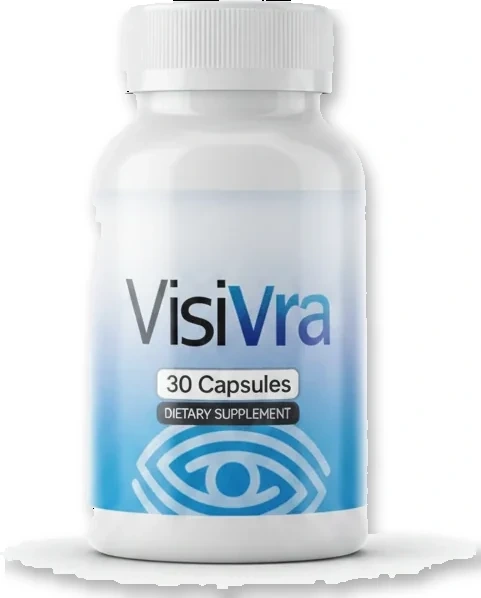
Two bottles is sixty capsules, sixty days and the full length of the 60-day guarantee, which makes it the only tier where the decision and the evidence arrive together.
Two bottles $158 · six bottles $294 · 60-day money-back guarantee
Order Visivra On The Official Website30 capsules a bottle · lot VIS-26/MY-3811 · ships from the U.S.
What to measure, and what not to bother with
Three measurements are worth taking at home and one is worth paying for. All four beat an impression, and an impression is what most people are working from when they decide a supplement did or did not do anything.
- Screen hours on a normal working day. An honest number, phone included. This is the largest confounder in the whole category and it is the one most likely to change without being noticed.
- End-of-day eye comfort, out of five. Crude, subjective, and worth recording precisely because it is the thing people otherwise remember wrongly.
- Glare recovery in seconds. How long until vision is normal again after oncoming headlights on the same stretch of road. Counted, not described.
- Macular pigment optical density, at an optometrist. The only instrumented option, offered by some practices, and the measurement the carotenoid trials actually used.
What is not worth measuring
An eye chart at home is not worth the effort. Acuity is mostly optics and a spectacle prescription, and no supplement changes either. Neither is a general sense of whether things look brighter, which moves with daylight, sleep and mood far more than with anything swallowed.
Five things that will fool you
Eyes are a noisy system to measure at home, and five things move the same numbers a supplement is being judged on.
- Screen hours. A week when work eased off produces better eyes than any capsule.
- Sleep. Two short nights move end-of-day comfort more than sixty capsules will.
- The spectacle prescription. An out-of-date prescription produces exactly the symptoms people buy an eye supplement for, and it is fixable in an afternoon.
- The season. Daylight hours, glare and indoor heating all change between November and June, and a sixty-day test crosses part of that.
- Expectation. Anyone who has just paid for something is a poor judge of it in week one, which is the second reason for writing a baseline down before starting.
The fix for all five is the same and it costs nothing: record screen hours beside the result, every time. A good week that coincided with a quiet fortnight at work is not a result.
Why sixty days is the number that matters
Sixty days keeps coming up in this category and it is worth understanding why rather than treating it as a marketing convention.
It clears the eight-week mark where the shortest published trial finished, with four days to spare. It passes the band most sellers describe as typical. And on this product it is exactly the entry pack: two bottles, sixty capsules at one a day, sixty days, and a 60-day money-back window running from the date of purchase.
Those three numbers meeting is the single most practical fact about how this product is sold. A buyer taking the entry tier reaches the end of the second bottle and the end of the refund window on the same day. The guarantee page sets out the terms and the timeline page sets out the checkpoints inside it.
Day 45, not day 60. A return posted on day 59 and arriving on day 63 is a conversation rather than a certainty, and the window is about when the claim is made. Deciding by day 45 leaves room for the telephone call, the authorisation and the postage.
What would make it take longer
Three things extend the timeline and only one of them is under anybody's control.
The amount. Every duration on this page belongs to a trial that used a stated dose. AREDS2 gave lutein 10 mg and zeaxanthin 2 mg. The bilberry studies gave 240 mg and 480 mg. A product holding less than a trial amount would be expected to take longer, or to produce a smaller change over the same period, which is why a label that prints its amounts is worth more than one that does not.
Absorption. Four of the six actives in a typical eye formula are fat-soluble. Taken with black coffee rather than a meal, less of the capsule arrives, and the timeline stretches for a reason that has nothing to do with the formula.
Adherence. A sixty-day course with eleven missed days inside it is a forty-nine-day course. This is the one variable a person controls completely and the one the written note above catches.
When to stop rather than wait
Patience is the theme of this article and it has a limit. Three situations call for stopping rather than continuing to wait.
- Something changed suddenly. A curtain across part of the vision, a shower of new floaters, flashing lights, or sight lost in one eye. These belong to an eye casualty department the same day and no supplement question is relevant to them.
- Straight lines look bent. That distortion is the classic reason to have the macula examined, and an examination is the correct response rather than a longer course.
- Day 45 arrived and nothing is different. That is what the 60-day window is for, and the refund policy sets out the five steps.
An eye examination finds the changed prescription, the early cataract and the raised pressure. All three produce symptoms that feel like the ones an eye supplement is sold for, all three are treatable when found early, and none of them is addressed by a capsule. If the last examination was more than two years ago, that appointment will tell you more than sixty days of anything.
References
- Age-Related Eye Disease Study 2 (AREDS2) Research Group. Lutein + zeaxanthin and omega-3 fatty acids for age-related macular degeneration: the Age-Related Eye Disease Study 2 (AREDS2) randomized clinical trial. JAMA. 2013;309(19):2005-15. PMID 23644932. https://pubmed.ncbi.nlm.nih.gov/23644932/
- Nolan JM, Power R, Stringham J, et al. Enrichment of macular pigment enhances contrast sensitivity in subjects free of retinal disease: Central Retinal Enrichment Supplementation Trials - report 1. Invest Ophthalmol Vis Sci. 2016;57(7):3429-39. PMID 27367585. https://pubmed.ncbi.nlm.nih.gov/27367585/
- Machida N, Kosehira M, Kitaichi N. Clinical effects of dietary supplementation of lutein with high bio-accessibility on macular pigment optical density and contrast sensitivity: a randomized double-blind placebo-controlled parallel-group comparison trial. Nutrients. 2020;12(10):2966. PMID 32998324. https://pubmed.ncbi.nlm.nih.gov/32998324/
- Ozawa Y, Kawashima M, Inoue S, et al. Bilberry extract supplementation for preventing eye fatigue in video display terminal workers. J Nutr Health Aging. 2015;19(5):548-54. PMID 25923485. https://pubmed.ncbi.nlm.nih.gov/25923485/
- Hecht KA, Marwah M, Wood V, et al. Astaxanthin (AstaReal) improved acute and chronic digital eye strain in children: a randomized double-blind placebo-controlled trial. Adv Ther. 2025;42(4):1811-1833. PMID 40014233. https://pubmed.ncbi.nlm.nih.gov/40014233/
- Kosehira M, Machida N, Kitaichi N. A 12-week-long intake of bilberry extract (Vaccinium myrtillus L.) improved objective findings of ciliary muscle contraction of the eye: a randomized, double-blind, placebo-controlled, parallel-group comparison trial. Nutrients. 2020;12(3):600. PMID 32106548. https://pubmed.ncbi.nlm.nih.gov/32106548/