Visivra Official Website › Blog › Zinc And Copper Move Together
Zinc And Copper Move Together In An Eye Formula
The original AREDS trial gave zinc 80 mg a day with copper 2 mg alongside it, and the copper was not decoration. Sustained high zinc intake pushes copper status down over months, which is why the two appear together on a well-built label and why an amount matters more here than anywhere else on a panel.
- Zinc is a cofactor for the enzymes that recycle vitamin A in the retina, which is why it is in eye formulas at all.
- AREDS gave 80 mg a day and gave 2 mg of copper with it, deliberately.
- The adult tolerable upper intake for zinc is 40 mg a day from all sources combined.
- Sustained high zinc competes with copper absorption and lowers copper status over months.
- A label naming zinc without an amount leaves the only question that matters here unanswerable from the panel.
Why zinc is in an eye formula
The retina holds zinc in unusually high concentration, higher per gram than almost any other tissue in the body, and it holds it for a reason.
Every time light strikes a photoreceptor, a vitamin A derivative changes shape and has to be reset before that cell can respond again. The resetting happens in the layer of cells behind the photoreceptors, and the enzymes that do it depend on zinc as a cofactor. The cycle runs continuously, in millions of cells, all day.
That is the mechanism, and it is solid physiology rather than a marketing story. What it does not establish is that adding more zinc to a person who has enough improves anything, which is a separate question that a trial has to answer.
The form on the label is a second variable
Zinc reaches a capsule as a compound rather than as a metal, and the compound decides how much of the label's milligram figure the body actually takes up. Zinc oxide, the form AREDS used, is the cheapest and among the least well absorbed. Gluconate, citrate and picolinate are the commoner supplement forms and they behave differently from each other.
That matters for the arithmetic in this article, because a printed figure is an amount of elemental zinc rather than an amount absorbed. A well-built label names the form as well as the weight, which is one more line and costs a manufacturer nothing.
What AREDS gave, and why it added copper
The original AREDS trial built its arms around zinc, at 80 mg a day as zinc oxide. That is roughly eight times an adult's recommended dietary allowance and twice the tolerable upper intake, given deliberately in a supervised trial.
It also gave 2 mg of copper as cupric oxide, and the reason is the subject of this article. Zinc and copper compete for absorption in the gut, through a mechanism involving a metal-binding protein that zinc induces. Push zinc high enough for long enough and copper status falls.
AREDS2 retained the copper and additionally tested a 25 mg zinc arm, which is a recognition that 80 mg is a large amount and worth examining.
The design lesson for a label
A formula that copies AREDS's zinc and leaves out its copper has copied half a decision. Whether that matters depends entirely on how much zinc is in it, which brings the discussion straight back to whether the amount is printed.
The ceiling, and the five things that count toward it
The Institute of Medicine chapter sets the adult tolerable upper intake for zinc at 40 mg a day from all sources combined. The phrase doing the work there is 'all sources'.
| Daily zinc | Where the figure comes from | What travels with it |
|---|---|---|
| 8–11 mg | The recommended dietary allowance for adults | Ordinary food |
| 25 mg | The lower-zinc arm AREDS2 tested | Inside a supervised formula |
| 40 mg | The adult tolerable upper intake, from all sources combined | The ceiling the other rows are measured against |
| 80 mg | The original AREDS amount | Copper 2 mg, given deliberately |
| Unknown | A label that names zinc without an amount | Whatever else is in the cabinet, also unmeasured |
Four published figures and one unanswerable row. The last one is the situation a buyer is in when a label names an ingredient and stops.
And here is where those milligrams come from in an ordinary life:
| Source | Typical zinc contribution | How visible it is |
|---|---|---|
| Diet | Most of an adult's intake, from meat, shellfish, legumes and dairy | Invisible, and rarely the problem |
| A multivitamin | Commonly 8 to 15 mg | Printed on the label, and rarely read |
| A cold lozenge course | Can be high for a short period | Printed, and short-lived |
| An AREDS-style eye formula | 25 to 80 mg | Printed on a good label |
| An eye formula naming zinc without an amount | Unknown | A question for the seller |
Five contributions toward one 40 mg ceiling. Only one of them is usually being thought about at the time.
The pattern is clear enough. A person taking a multivitamin, an eye formula and a cold lozenge in the same fortnight is stacking three contributions, and only the ones that print a figure can be added up.
Ask the zinc amount before the first Visivra bottle
It is a two-minute telephone call, it settles the only question this article raises, and the 60-day window covers the decision either way.
Two bottles $158 · six bottles $294 · 60-day money-back guarantee
Order Visivra On The Official Website30 capsules a bottle · lot VIS-26/MY-3811 · ships from the U.S.
What low copper looks like
Copper deficiency from excess zinc is not common and it is not theoretical either. It has been documented well enough to be described in the literature.
A published case report describes copper deficiency arising from a sustained excess zinc intake, presenting as a blood abnormality rather than as anything a person would connect to a supplement. That is the characteristic feature of it: the presentation is haematological or neurological rather than obvious.
A 2026 systematic review collects the haematological toxicities associated with zinc excess across the descriptive literature, which is the best available overview of how these cases present.
- It develops over months, not days, because copper stores deplete slowly.
- It presents as blood counts and neurological signs rather than as an eye symptom.
- It is reversible when identified, which is the argument for knowing about it rather than worrying about it.
- It is associated with sustained high zinc, which in practice means denture adhesives, long-term high-dose supplements, and stacked sources.
- It is the reason a well-built formula pairs the two minerals rather than the reason to avoid zinc.
The other side of the evidence
An article that only prints the alarming half of a literature is not honest, so here is the other half.
A controlled trial found that zinc supplementation did not alter sensitive biomarkers of copper status in healthy participants. That is a real finding and it should temper the picture considerably.
Amount and duration are what separate the two pictures. A modest zinc intake over a normal period is a different proposition from 80 mg a day for years, and most of the concerning case literature sits at the far end of that range.
Zinc in an eye formula is sensible and well grounded. Zinc at AREDS amounts without copper, over months, is a question worth asking. And zinc in an unknown amount is a question nobody can answer from the label, which is why the amount is the whole of this article.
Why the amount is the whole question
Everything above resolves into a single practical point. Whether a zinc row on an eye supplement is unremarkable or worth a conversation depends on one number, and that number is either printed or it is not.
At 8 to 15 mg, which is what a multivitamin typically carries, there is nothing to discuss. At 25 mg, the AREDS2 lower arm, a person taking nothing else is comfortably under the ceiling. At 80 mg, the original AREDS amount, copper belongs in the formula and the product should be treated as the supervised intervention it was modelled on.
At an unprinted amount, none of those three sentences can be applied, and that is the situation a reader is in with a label that names zinc and stops.
What to do about it
Four steps, in order, and none of them takes long.
- Read the other labels first. A multivitamin's zinc row is printed and rarely read, and it is the commonest second source.
- Ask the seller for the amount. On this product that is the order desk, which holds the specification.
- Ask about copper in the same call. Whether the formula carries any, and if not, what the zinc amount is that makes it unnecessary.
- If you are already on an AREDS-style product from an eye clinic, tell that clinic before adding a second formula. The whole point of those products is a fixed total.
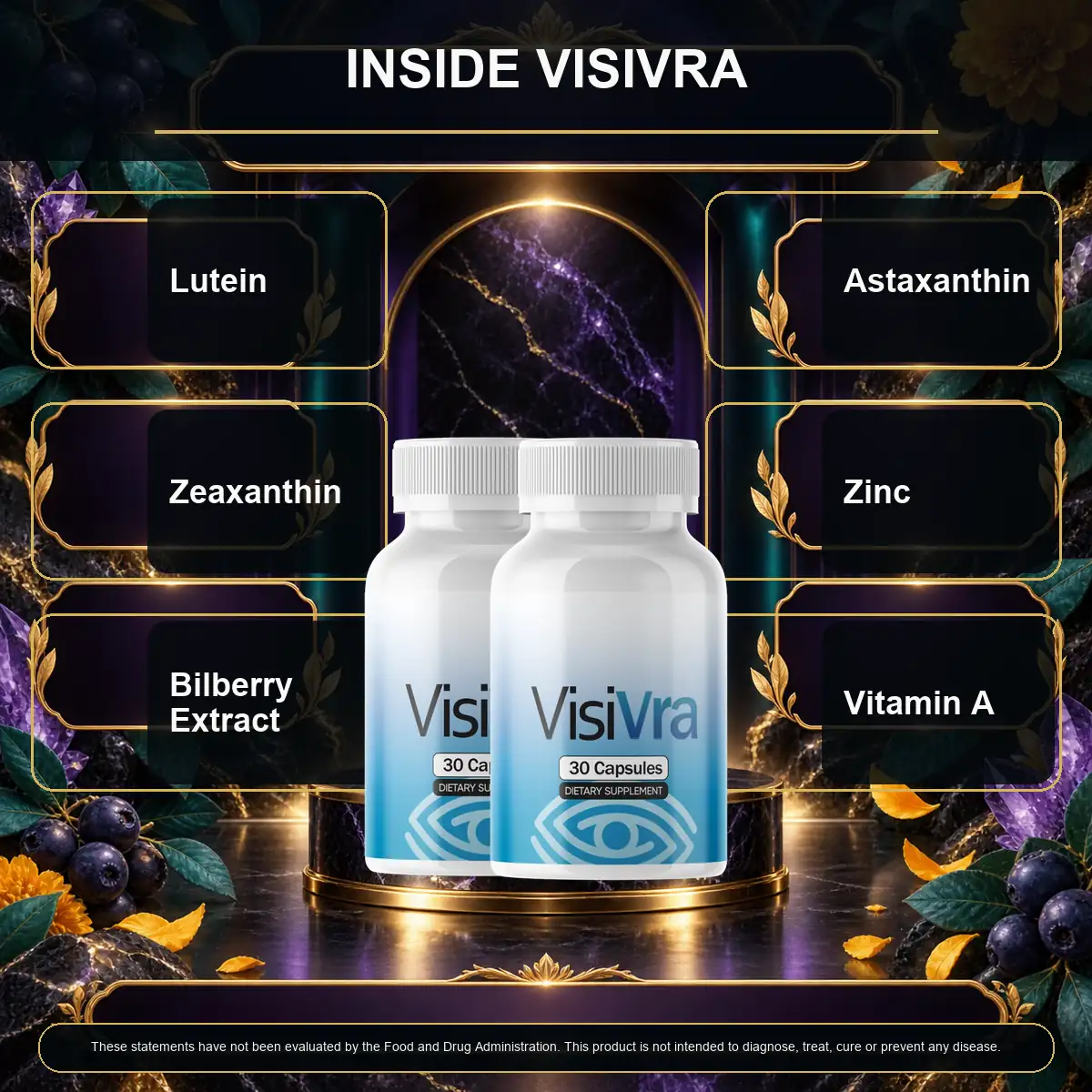
On the product this website sells, zinc is the fifth of six names and copper is not among them. That is stated on the ingredients page, it is row five of the eight-point scorecard on the choosing guide where this product fails it, and the full account is on the side effects page.
It is not saying the capsule contains too much zinc, or too little, or that anybody has come to harm. It is saying that the one figure which would settle the question is with the seller, and that a telephone call is cheaper than a guess.
References
- Age-Related Eye Disease Study Research Group. A randomized, placebo-controlled, clinical trial of high-dose supplementation with vitamins C and E, beta carotene, and zinc for age-related macular degeneration and vision loss: AREDS report no. 8. Arch Ophthalmol. 2001;119(10):1417-36. PMID 11594942. https://pubmed.ncbi.nlm.nih.gov/11594942/
- Institute of Medicine (US) Panel on Micronutrients. Zinc. In: Dietary Reference Intakes for Vitamin A, Vitamin K, Arsenic, Boron, Chromium, Copper, Iodine, Iron, Manganese, Molybdenum, Nickel, Silicon, Vanadium, and Zinc. Washington (DC): National Academies Press; 2001. https://www.ncbi.nlm.nih.gov/books/NBK222317/
- Amisha F, Saluja P, Gautam N, et al. Acquired hyperzincaemia due to zinc-laden denture adhesives leading to hypocupraemia as a cause of neutropenia. Eur J Case Rep Intern Med. 2021;8(11):002983. PMID 34912740. https://pubmed.ncbi.nlm.nih.gov/34912740/
- Bertinato J, Simpson JR, Sherrard L, et al. Zinc supplementation does not alter sensitive biomarkers of copper status in healthy boys. J Nutr. 2013;143(3):284-9. PMID 23303874. https://pubmed.ncbi.nlm.nih.gov/23303874/
- Dutta A, Chaudhary V, Kumari S, et al. Zinc-induced hematologic toxicities: a systematic review of descriptive studies. Biol Trace Elem Res. 2026;204(9):6628-6642. PMID 42087025. https://pubmed.ncbi.nlm.nih.gov/42087025/
- Age-Related Eye Disease Study 2 (AREDS2) Research Group. Lutein + zeaxanthin and omega-3 fatty acids for age-related macular degeneration: the Age-Related Eye Disease Study 2 (AREDS2) randomized clinical trial. JAMA. 2013;309(19):2005-15. PMID 23644932. https://pubmed.ncbi.nlm.nih.gov/23644932/