Visivra Official Website › Blog › Visivra Before and After: Why There Are No Photos, and What You Can Measure Instead
Visivra Before and After: Why There Are No Photos, and What You Can Measure Instead
Shoppers often look for a before-and-after picture. With a skin cream that makes sense. With an eye capsule it does not, because nothing the capsule is sold for can be photographed. This page explains why, then gives you something better to do: a simple written test, with a baseline, that you can run in your own kitchen over sixty days.
No before-and-after photo exists for Visivra, and no trial has tested the finished capsule, so nobody can promise you a visible change. The seller describes a typical wait of 3 to 6 weeks. Write down a baseline before the first capsule, then compare at day 30 and day 60.
- Before-and-after imagery: none exists for this product, and this website does not publish any.
- No clinical trial has been run on the finished Visivra capsule. Cited studies tested single ingredients at stated amounts.
- The seller's usual wait before buyers notice anything: 3 to 6 weeks. The shortest published trial on any of the six ingredients ran eight weeks.
- Every roster review was filed between day 21 and day 58, and none claims anything in week one.
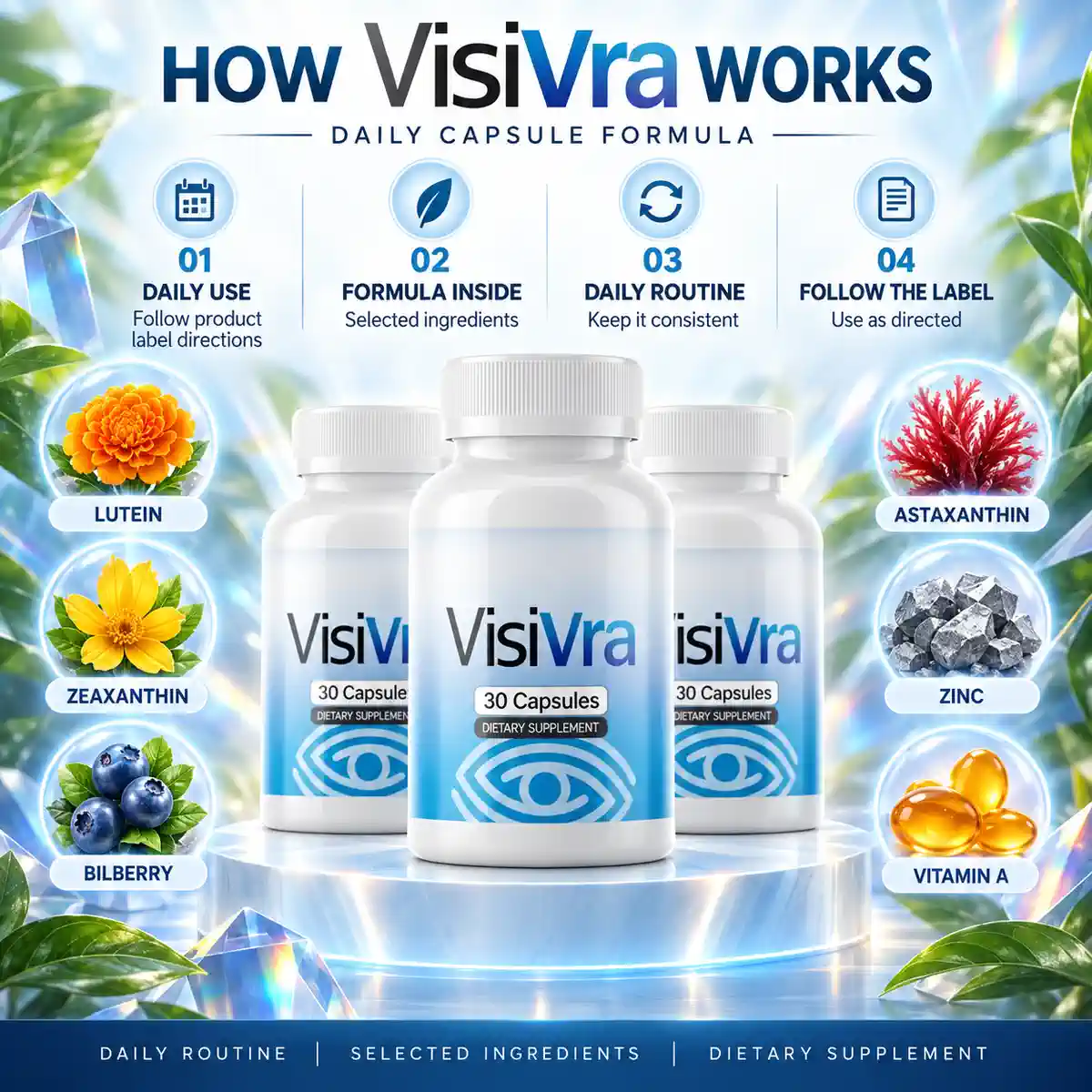
- Four supports are printed on the pack: visual clarity, healthy retinal function, long-term eye wellness and help defending the eyes from blue light exposure.
- The 60-day guarantee is the practical test window. Return postage is the buyer's cost.
Why are there no Visivra before and after photos?
Because there is nothing honest to photograph. The four supports on the pack are visual clarity, healthy retinal function, long-term eye wellness and help defending the eyes from blue light. None of those changes how an eye looks from the outside. A picture of an eye taken a month apart would show the same eye.
A before-and-after image would only be a claim wearing a photograph. We do not publish one, and we suggest you treat any that you find with suspicion. If a page shows you a dramatic transformation, ask who measured it, with what instrument, and over how long.
What can change, if anything does, is how your eyes feel and perform at the end of a long day. That can be written down. It cannot be photographed.
Does Visivra really work?
We cannot tell you that it does, and we will not pretend to. Here is what we can say. Each of the six named ingredients has some human eye research behind it. The research tested each ingredient on its own, at an amount the Visivra label does not print. So the studies do not transfer to this capsule by default.
Take lutein. The AREDS2 trial used 10 mg a day for five years, in people who already had intermediate macular degeneration. Take astaxanthin. A 2025 trial used 4 mg a day for 84 days, and its participants were children. Take bilberry. One trial used 240 mg a day for 12 weeks, and another used 480 mg a day for eight weeks in screen workers. A label with no amounts cannot be set beside those figures.
That is why this site calls the 60-day guarantee the practical answer. You cannot do the arithmetic from the bottle. You can run the experiment on yourself, and you can ask for your money back if it disappoints. The wider question is covered in our post on whether vision supplements are worth it.
Test it on your own terms
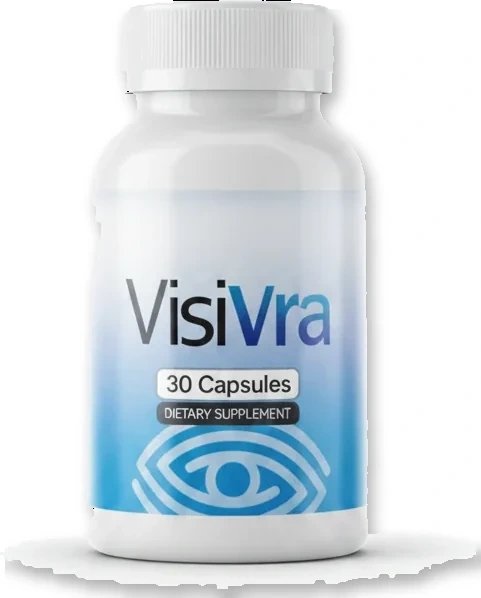
If you decide to try it, the checkout shows the live price and the written 60-day terms. Write your baseline before the first capsule.
Two bottles $158 · three bottles $207 · six bottles $294 · 60-day money-back guarantee
See today’s price and guaranteePrices as read on 18 September 2026; the checkout shows the current price. Disclosure: Myvisivra is paid when an order is placed through the seller’s checkout.
How is Visivra meant to work, in three routes?
An eye supplement is not a drug. It supplies material the eye already uses. The ingredients fall into three groups, and each group has its own clock.
| Route | Ingredients | Part of the eye | Pace of the research |
|---|---|---|---|
| Macular filter | Lutein and zeaxanthin | The macula, where a yellow pigment layer sits | Builds slowly. Trials run from twelve weeks to years. |
| Focusing and strain | Bilberry extract and astaxanthin | The ciliary muscle at the front of the eye | Trials ran 8 weeks, 12 weeks and 84 days. |
| Visual cycle | Zinc and vitamin A | The photoreceptors and the pigment layer behind them | Continuous housekeeping, not a build-up. |
Every row describes normal eye function. None of the rows claims that this capsule improves the step beside it.
Lutein and zeaxanthin are fat-soluble and collect in the macula, which is why they are on eye labels. A 2020 lutein trial tracked pigment density alongside contrast sensitivity over months, not days. The CREST trial ran twelve months before it measured its result.
How long does Visivra take to work?
Buyers are told to expect 3 to 6 weeks, in the seller's own words. The published trials behind the ingredients ran eight weeks at the shortest and five years at the longest. Put together, here is a fair reading of the first two months.
| When | What to expect | What to do |
|---|---|---|
| Days 1 to 7 | Nothing measurable. Week one is a baseline, not a test. | Write down your three starting numbers. |
| Weeks 2 to 3 | Blood levels of the carotenoids rising. Nothing you would notice. | Check that the routine has stuck. |
| Weeks 4 to 6 | The seller's typical band, and the first honest checkpoint. | Repeat the same three measures. |
| Weeks 7 to 8 | The shortest bilberry trial finished here. | Look again, and note screen hours. |
| Day 60 | The guarantee window closes. Decide by day 45 if you may want a refund. | Compare with day one and decide. |
This table reports what published studies chose to measure and when. It does not forecast what any person will notice.
On the seller's roster, five of eight named buyers gave four stars and a comment that a month was fair and week one was not enough. That agrees with the timeline. It says nothing about effect, because nobody on the roster measured anything.
What can you measure instead of a photo?
Some measures are crude and free. Some need an instrument. In order of how much they prove:
- Macular pigment optical density. An instrument reading that some optometrists offer. A reading before and after is a real experiment.
- Contrast sensitivity. A chart test, different from the letters chart. It was the main endpoint in the carotenoid trials.
- Glare recovery in seconds. Count how long it takes to see normally after oncoming headlights on the same stretch of road.
- End-of-day eye comfort on a scale of one to five, using the same scale each time.
- Screen hours on a normal working day. This is not a result. It is the biggest confounder, so log it beside every score.
The first two are the strongest and need an eye professional. The last three are free and take a minute. An eye examination outranks all five, because it finds the causes a supplement never touches.
What can fool your own result?
Five ordinary things move the same numbers a capsule would get credit for.
| Variable | What it moves | How to stop it taking the credit |
|---|---|---|
| Hours at a display | Eye strain and comfort | Log the hours beside each score. |
| Short nights of sleep | End-of-day comfort, strongly | Note any week with two or more, and discount it. |
| An old spectacle prescription | Blur, focusing effort, headaches | Have it checked before you start, not during. |
| Time of year | Glare, daylight, indoor air | Compare day 30 and day 60 with day 0, not with memory. |
| Having just paid for it | Every self-reported number in week one | Write the baseline first and never revise it. |
A number that improved in a week when work eased off has an obvious second explanation.
What should you write down on day one?
- Your screen hours on a normal working day, phone included. Be honest.
- How your eyes feel at the end of that day, from one to five.
- Your glare recovery time in seconds.
- The date of your last eye examination. If it was more than two years ago, book one. It will tell you more than sixty days of any capsule.
Then leave it alone. Repeat the same three at day 30 and day 60. If you want the full routine, read our daily routine guide. And if your sight changes suddenly, or you see new floaters, flashes or pain, skip the diary and see an eye doctor the same day. The review of nutrition and digital eye strain explains how much of this field rests on questionnaires rather than instruments.
Which sources sit behind this article?
Every study named in this article is one of the sources already cited across this website. Each link opens the public record. The studies tested single ingredients at stated amounts. None of them tested the finished Visivra capsule.
- A 2020 lutein trial. https://pubmed.ncbi.nlm.nih.gov/32998324/
- The CREST trial. https://pubmed.ncbi.nlm.nih.gov/27367585/
- A review of nutrition and digital eye strain. https://pubmed.ncbi.nlm.nih.gov/36235656/
Frequently asked questions
Are there real Visivra before and after photos?
No. No before-and-after imagery exists for this product, and this website publishes none. The four supports on the pack are not things a photograph can show.
Does Visivra really work?
We cannot say. Each ingredient has some human eye research, but the studies used stated amounts and the label prints none. No trial has tested the finished capsule. The 60-day guarantee lets you test it yourself.
How does Visivra work?
It supplies material the eye already uses. Lutein and zeaxanthin build a yellow pigment layer in the macula. Bilberry and astaxanthin belong to the focusing and screen-strain research. Zinc and vitamin A feed the visual cycle.
How long does Visivra take to work?
The seller gives 3 to 6 weeks as the usual wait. Published trials on the ingredients ran from eight weeks to five years. Nothing should be expected in week one.
What if I notice nothing after 60 days?
That is what the guarantee is for. Phone the order desk, +1 (323) 347-4522, and quote your order ID. Return postage is your cost, and the refund steps are on the refund policy page.
Can an optometrist measure whether it is working?
Macular pigment density and contrast sensitivity can both be measured, and some practices offer them. These are the only instrumented options. Ask your own optometrist what they can do.
Our view
We think the right way to judge this product is quietly and in writing. Skip the photos. Write down three numbers before the first capsule. Look at them again at day 30 and day 60, with your screen hours beside them. Then decide while the guarantee is still open.
If you notice something, good. Be honest with yourself about sleep, screen time and prescriptions. If you notice nothing, that is useful information too, and the refund route exists for that case.
Visivra is a dietary supplement. It is not FDA approved, and no supplement is. It does not treat, cure or prevent any disease, and it does not restore lost sight. Changed vision is a reason to see an eye doctor.
Sixty days is the test window
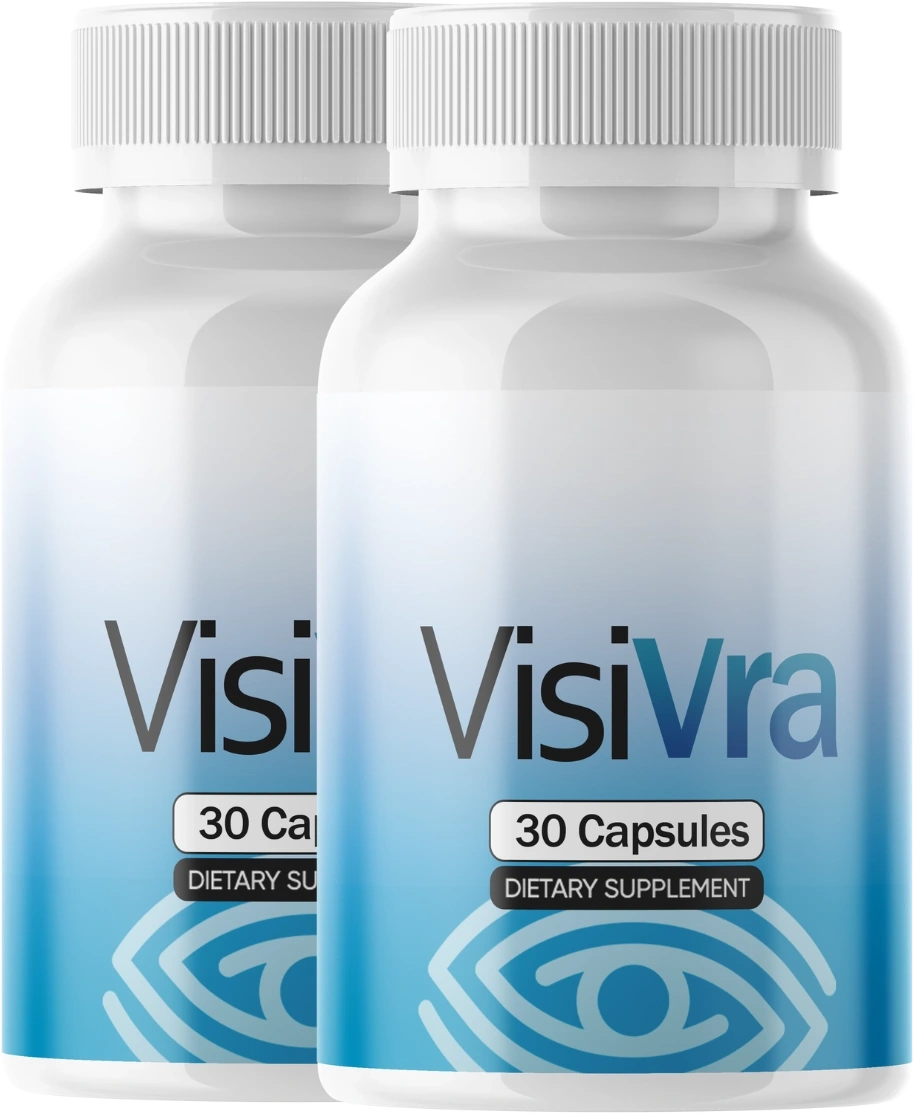
A calm test with a written baseline is the fairest way to find out. The official page shows today's price and the guarantee in full.
Two bottles $158 · three bottles $207 · six bottles $294 · 60-day money-back guarantee
See today’s price and guaranteePrices as read on 18 September 2026; the checkout shows the current price. Disclosure: Myvisivra is paid when an order is placed through the seller’s checkout.
Last updated