Visivra Official Website › Blog › The Vitamin A Question
The Vitamin A Question On An Eye Supplement Label
Vitamin A earns its place in an eye formula honestly: bound to a protein in the photoreceptors it becomes the molecule that responds to light. It is also the ingredient AREDS2 took out, and the reason it did so decides whether a particular person should take a particular bottle.
- Vitamin A on a label can mean retinol and its esters, or beta carotene. They are not interchangeable.
- Beta carotene at high supplemental amounts is associated with more lung cancer in smokers, in two large trials and one follow-up.
- AREDS2 removed beta carotene from the AREDS formula for exactly that reason.
- Preformed vitamin A has a separate literature about bone, and an upper intake of 3,000 micrograms RAE a day for adults.
- The check on a label is binary: either the form is named, or the product does not carry vitamin A at all.
Why vitamin A is on eye labels at all
The case for vitamin A in an eye formula is the oldest and most solid in the whole category, and it is worth stating before anything critical.
A photoreceptor works by breaking a molecule. Light strikes rhodopsin, which is a vitamin A derivative bound to a protein, and changes its shape; that change is the signal the brain eventually reads. The molecule then has to be rebuilt, and the raw material for rebuilding it is vitamin A.
Severe vitamin A deficiency causes night blindness and, if it continues, permanent damage. It remains a major cause of preventable childhood blindness in parts of the world. MedlinePlus sets out the vitamin's roles and its sources.
Why that does not settle the question
Correcting a deficiency and supplementing someone who is not deficient are different interventions with different risk profiles. Almost nobody in a developed country buying an eye supplement is vitamin A deficient, which means the relevant literature is not the deficiency literature at all.
One name, two molecules
This is the distinction the whole article turns on, and most labels do not make it.
| Preformed vitamin A | Provitamin A | |
|---|---|---|
| What it is | Retinol and retinyl esters | Beta carotene and relatives |
| Where it comes from | Animal foods, and most supplements | Orange and green plant foods |
| How the body handles it | Used directly; stored in the liver | Converted as needed, which limits how much becomes vitamin A |
| The upper intake | 3,000 micrograms RAE a day for adults | No upper intake set for beta carotene from food |
| The research concern | Bone, in long-term high intakes | Lung cancer, in smokers taking high supplemental amounts |
| On an eye label | Usually written as Vitamin A with an IU or mcg figure | Usually written as beta carotene, and removed from AREDS2 |
One name on a label, two molecules, two different research histories. This is the reason the form is the first question to ask.
A row reading Vitamin A with a microgram figure beside it is usually preformed. A row reading beta carotene is provitamin. A row reading Vitamin A with no figure and no form is an unanswered question, and which answer applies changes who should take the product.
What happened with beta carotene
Two large trials in the 1990s set out to test whether beta carotene supplementation reduced cancer risk. Both found the opposite in the group they were most interested in.
| Trial | What it gave | Who took part | What happened |
|---|---|---|---|
| CARET | Beta carotene 30 mg + retinol 25,000 IU daily | Smokers and asbestos-exposed workers | Stopped early: more lung cancer in the supplemented arm |
| ATBC | Beta carotene 20 mg daily | Male smokers | More lung cancer in the beta carotene arm |
| AREDS2, ten-year follow-up | The AREDS formula with and without beta carotene | People with macular degeneration | 23 lung cancers against 11, mostly in former smokers; OR 1.82 |
Three trials, one direction of effect, and one population in which it appears. The third is why AREDS2 rebuilt its own formula.
The doses in the first row of that table are worth reading twice. CARET combined beta carotene 30 mg with retinol 25,000 IU daily, in people whose baseline lung cancer risk was already raised, and the trial ended before its planned finish because the supplemented arm was faring worse.
ATBC gave beta carotene 20 mg a day to male smokers, alongside alpha-tocopherol, and found the same direction of effect. Two independent trials, two populations of smokers, one uncomfortable answer.
It is important to be accurate about the limit of that finding. The signal is in smokers and former smokers at high supplemental amounts. Beta carotene from food has no such record, and nobody is suggesting carrots are a hazard.
The preformed vitamin A literature
Preformed vitamin A has a different concern attached to it, and it is about bone rather than lung.
A Swedish cohort study related serum retinol levels to fracture risk, and the Iowa Women's Health Study examined vitamin A intake and hip fracture in postmenopausal women. Neither is a randomised trial and both are worth reading rather than summarising into a slogan.
The ceiling for the preformed form is 3,000 micrograms RAE a day in adults, set in the Institute of Medicine chapter. It applies to retinol and its esters rather than to beta carotene, and it counts everything at once: a multivitamin, a liver-heavy diet, a retinoid medicine and an eye supplement all contribute to the same total.
Preformed vitamin A is stored in the liver rather than excreted, so intake accumulates in a way water-soluble vitamins do not. That is what makes a second unlabelled source a genuine question rather than a theoretical one.
Ask the form before the first bottle, of Visivra or anything else
One telephone call settles which literature applies to you, and a 60-day window covers the decision either way.
Two bottles $158 · six bottles $294 · 60-day money-back guarantee
Order Visivra On The Official Website30 capsules a bottle · lot VIS-26/MY-3811 · ships from the U.S.
Why AREDS2 rebuilt its own formula
The original AREDS formula carried beta carotene 15 mg. By the time AREDS2 was designed, CARET and ATBC had both reported, and running a large trial of a formula containing beta carotene in a population that included former smokers had become difficult to justify.
So AREDS2 tested removing it, and the ten-year follow-up reported the numbers: 23 lung cancers in the beta carotene arm against 11 in the arm without it, mostly in former smokers, odds ratio 1.82 (95% CI 1.06–3.12; P=.02).
The modern AREDS2 formula therefore carries no beta carotene at all. Lutein and zeaxanthin took its place, which is how the two carotenoids came to dominate this category in the first place.
The irony worth noticing
A great many eye supplements now quote AREDS2 on the label and carry a vitamin A row that AREDS2 removed. That is not necessarily wrong: a small amount of preformed vitamin A is a different proposition from 15 mg of beta carotene. But a label that quotes the trial and reinstates the ingredient owes its reader the form, at minimum.
The check to run on any label
This is the most portable thing in this article and it takes five seconds.
- Find the vitamin A row. If there is not one, the check is over and the product has taken the AREDS2 position.
- Read what it says. Beta carotene, retinol, retinyl palmitate, or just Vitamin A.
- If it names a form and an amount, the product can be assessed. Compare the amount against 3,000 micrograms RAE for preformed.
- If it names neither, the product cannot be assessed from its label, and the seller is the only route to the answer.
- If you smoke or used to, treat step four as a stop rather than a shrug. This is the one group for whom the answer decides the purchase.
- A product with no vitamin A row at all is taking the position AREDS2 arrived at, and that is a defensible choice rather than an omission.
- A product naming beta carotene and an amount is making a choice a smoker should know about.
- A product naming preformed vitamin A and an amount can be added to whatever else is in the cabinet and checked against a ceiling.
- A product naming neither has left the most consequential row on its label to a telephone call.
What this applies to on the product sold here
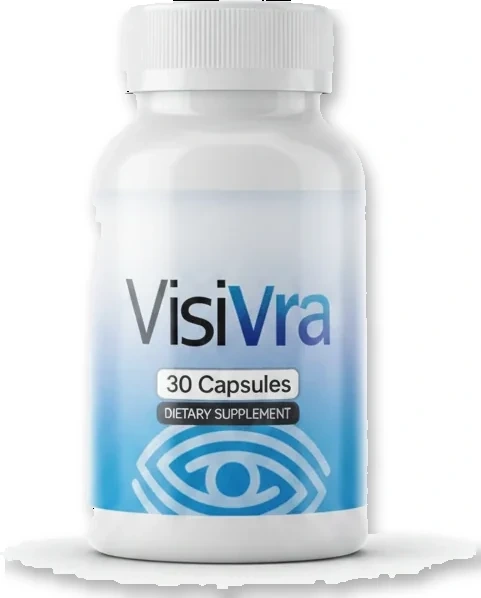
This website sells an eye supplement whose label names Vitamin A and gives neither the form nor the amount. That is the fourth case in the list above, and it is stated here rather than left for a reader to notice.
The practical consequence is a telephone call to the order desk, before the first bottle rather than after it, asking which form the capsule uses. For a smoker or an ex-smoker that answer is not a detail: it is the thing the whole purchase turns on.
The full account sits on the side effects page, the check appears as row four of the eight-point scorecard on the choosing guide, where this product fails it, and the ingredients page prints what the trials used beside what the label says.
Because the alternative is a reader discovering it somewhere else, and because a check every product passes is not a check. The scorecard on this website fails this product on four of eight rows, and this is one of them.
References
- Omenn GS, Goodman GE, Thornquist MD, et al. Effects of a combination of beta carotene and vitamin A on lung cancer and cardiovascular disease. N Engl J Med. 1996;334(18):1150-5. PMID 8602180. https://pubmed.ncbi.nlm.nih.gov/8602180/
- Alpha-Tocopherol, Beta Carotene Cancer Prevention Study Group. The effect of vitamin E and beta carotene on the incidence of lung cancer and other cancers in male smokers. N Engl J Med. 1994;330(15):1029-35. PMID 8127329. https://pubmed.ncbi.nlm.nih.gov/8127329/
- Chew EY, Clemons TE, Agron E, et al. Long-term outcomes of adding lutein/zeaxanthin and omega-3 fatty acids to the AREDS supplements on age-related macular degeneration progression: AREDS2 report 28. JAMA Ophthalmol. 2022;140(7):692-698. PMID 35653117. https://pubmed.ncbi.nlm.nih.gov/35653117/
- Michaelsson K, Lithell H, Vessby B, et al. Serum retinol levels and the risk of fracture. N Engl J Med. 2003;348(4):287-94. PMID 12540641. https://pubmed.ncbi.nlm.nih.gov/12540641/
- Institute of Medicine (US) Panel on Micronutrients. Vitamin A. In: Dietary Reference Intakes for Vitamin A, Vitamin K, Arsenic, Boron, Chromium, Copper, Iodine, Iron, Manganese, Molybdenum, Nickel, Silicon, Vanadium, and Zinc. Washington (DC): National Academies Press; 2001. https://www.ncbi.nlm.nih.gov/books/NBK222318/
- MedlinePlus Medical Encyclopedia. Vitamin A. U.S. National Library of Medicine. https://medlineplus.gov/ency/article/002400.htm